
Some writers like to dive straight into a draft and discover the story as they go. Others prefer a roadmap before they write a single sentence.
The Snowflake Method was built for writers in that second camp (and for anyone who has ever stalled halfway through a manuscript because the story “fell apart somewhere around chapter seven”).
Created by author and physicist Randy Ingermanson, the Snowflake Method gives you a structured, step-by-step approach to outlining a novel. You start small (a single sentence) and gradually expand that idea into a full outline, character arcs, and scenes. Each step builds on the last, giving you a clear story foundation before you begin drafting.
Think of it like zooming in on a map. First, you identify the destination. Then you add highways. Then you sketch the side streets, landmarks, and final turns. By the end, you’ve got a route that makes drafting faster and far less chaotic.
In this guide, we’ll break down each step, look at examples, and walk through common pitfalls to avoid.
By the time you’re done, you’ll know whether the Snowflake Method is a good fit for your writing process (and exactly how to use it if it is).
What is a Koch Snowflake?

The Snowflake Method gets its name from a mathematical pattern called the Koch snowflake, which is a shape that starts simple and becomes more detailed as you repeat the same expansion steps.
Picture a triangle.
Then imagine adding a smaller triangle to the middle of each side. Then repeating that again. And again.
With every pass, the shape becomes more complex, but it always stays true to its original outline.
That’s the philosophy behind this outlining approach.
You begin with one simple idea. Then you expand it, refine it, and add layers… slowly building a full story without losing sight of the core concept that started it all.
Before You Start: Gather Your Raw Story Ideas
Before you begin the Snowflake Method, it helps to collect the raw material for your story. Characters, settings, conflicts, themes, scenes, lines of dialogue… anything that’s floating around in your head.
Think of this as clearing off your creative workbench. You’re not building anything yet, just laying out the pieces.
A notebook and pen work wonderfully here. Writing by hand forces you to slow down just enough to think, and many writers find it sparks stronger ideas. But if your best thoughts arrive in a notes app, voice memo, or text to yourself, use whatever keeps the ideas flowing.
The goal is simple: capture first, organize later.
You might jot down things like:
- “Small-town bakery owner inherits a failing chocolate shop next door”
- “Secret recipe locked in grandmother’s safe”
- “Rival chocolatier who wants to buy the building”
- “Theme: legacy vs. letting go”
- “Storm ruins holiday festival — forced collaboration?”
Nothing needs to be pretty. Bullet points, fragments, and half-formed thoughts are perfect at this stage. Just get them down where you can see them.
BTW: As you work through the Snowflake steps, new ideas will show up. Capture them quickly, then return to the plan. The structure will keep you moving forward, even as inspiration drops in along the way.
The Snowflake Method in 10 Ten Simple Steps
Now, let's walk through how to use the Snowflake method to design your novel.
1. Craft A One Sentence Summary
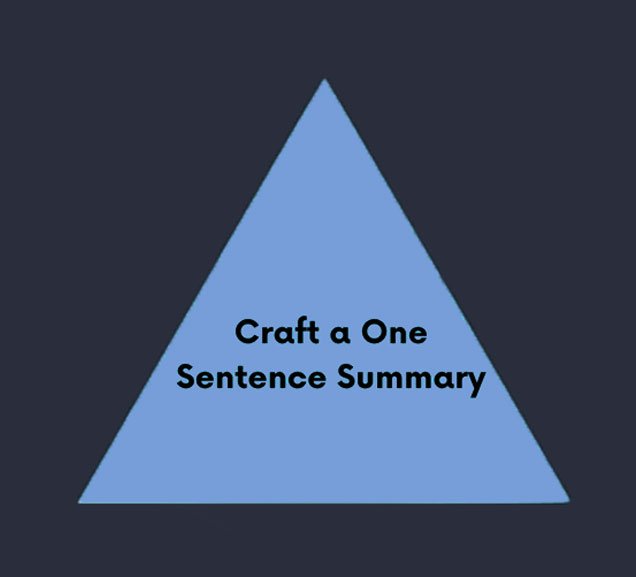
Start your Snowflake outline with a single sentence that captures the heart of your story.
A strong one-sentence summary should include:
- The protagonist
- Their goal or challenge
- The primary conflict
- The stakes or consequence
Aim for clarity over cleverness. Ten to fifteen words is often enough.
Here are a few one-sentence summary examples for Pride and Prejudice:
Structure:
Protagonist must overcome inner or outer conflict to reach their goal.
A sharp-minded young woman must overcome pride and prejudice to secure love and her future.
Structure:
Protagonist faces an obstacle that threatens personal or social stability.
A spirited woman confronts class expectations and first impressions on her path to love.
Structure:
Protagonist’s flaw creates internal and external barriers to happiness.
A witty woman must confront her own judgments to build the life she wants.
Notice how each sentence:
- Names or implies the protagonist (Elizabeth Bennet)
- Hints at the era/social context
- Establishes tension and theme
- Points toward what’s at stake
You don’t need to mention every character or subplot. You simply need one clean sentence that expresses the core idea driving your story.
If it’s hard to write your story in one sentence right now, that’s okay. Refining this sentence is part of the process.
The clearer you make it here, the stronger your foundation will be as you expand.
2. Write A One Paragraph Summary

Now expand your one-sentence summary into a single paragraph. Think of this as the rough shape of your story — beginning, middle, and end — without diving into every detail yet.
A helpful structure is five sentences:
- Set up your protagonist and world
- First major conflict or turning point
- Escalation — the stakes rise
- Major crisis that forces a choice
- Resolution (without unnecessary detail)
This gives the story shape without locking you into every beat yet.
We'll use Pride and Prejudice as our example again:
Elizabeth Bennet navigates society, marriage expectations, and family pressures in Regency England. She meets the proud Mr. Darcy, forming a sharp judgment that fuels tension between them. Family scandals and social expectations complicate her path and deepen her mistrust. When her younger sister’s reputation is endangered, Elizabeth must reconsider her assumptions and accept uncomfortable truths. Through humility and earned understanding, she finds love and a stable future with Darcy.
3. Create Character Synopsis

Next, write a brief character paragraph for each major character in your story. These aren’t full biographies, but clear character descriptions that establish motivation, goals, conflict, and growth.
A helpful structure for each character paragraph:
- Who they are
- What they want
- What stands in their way
- What internal change or realization they face
- How they influence the story’s direction
These summaries begin revealing how character drives plot (and vice versa).
For Pride and Prejudice, it would look similar to this:
Elizabeth Bennet
Elizabeth is intelligent, observant, and quick-witted, but prone to snap judgments. She seeks independence, emotional fulfillment, and a marriage based on respect rather than convenience. Her pride in her own discernment becomes her blind spot, leading her to misjudge others. Through personal humility and introspection, she learns to challenge her assumptions (a shift that not only alters her future but also strengthens her sense of self).
Mr. Darcy
Darcy is wealthy, reserved, and guided by a strong internal moral code, but his sense of superiority leads him to appear aloof and dismissive. He wants a meaningful partnership and to protect his family’s reputation, yet his pride and social expectations create obstacles. His journey involves learning humility, empathy, and the value of personal vulnerability (growth that ultimately brings him and Elizabeth together).
Jane Bennet
Jane is gentle, optimistic, and charitable, always seeing the best in others. Her goal is simple: a loving marriage and stable future. Her conflict arises from her quiet nature and reluctance to voice her feelings, which leads others to misunderstand her intentions. She learns to balance kindness with clarity, allowing her relationship with Bingley to succeed.
George Wickham
Charming and outwardly respectable, Wickham seeks financial security and social advantage without earning them. His easy manner conceals selfish motives and manipulative behavior. His actions introduce social scandal and tension, forcing other characters (especially Elizabeth and Darcy) to confront truths about integrity, deception, and responsibility.
You don’t need every minor character at this stage… just the key players who shape the story’s themes and conflicts.
Additional character notes will come later in the Snowflake process.
4. Grow Your Story to A One Page Description
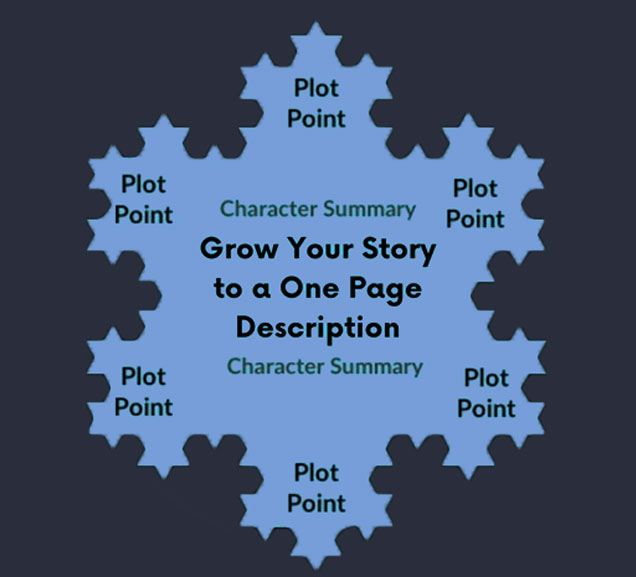
Now that you have your one-paragraph story summary, it’s time to expand it. In this step, you’ll take each sentence from your paragraph and turn it into its own short paragraph — usually four to five paragraphs total.
A helpful way to structure this:
- Paragraph 1: Setup (protagonist, world, core situation)
- Paragraph 2: First major problem or turning point
- Paragraph 3: Escalation (complications and rising stakes)
- Paragraph 4: Crisis (the breaking point or critical choice)
- Paragraph 5: Resolution (how things change and conclude)
What This Would Look Like for Pride and Prejudice
I won't bore you with a full page here, but here’s how the five-sentence summary naturally expands:
- Sentence 1 (Elizabeth’s world & expectations)
Expands into a paragraph about her family, social pressures, and early outlook. - Sentence 2 (meeting Darcy & initial conflict)
Grows into a paragraph exploring their first impressions, misunderstandings, and early tension. - Sentence 3 (rising complications)
Deepens into challenges from social class, family embarrassment, and miscommunication. - Sentence 4 (crisis and realization)
Expands into Lydia’s scandal, Darcy’s intervention, and Elizabeth confronting her own judgments. - Sentence 5 (resolution)
Becomes a paragraph describing reconciliation, mutual growth, and the earned relationship ending.
By the end of this process, you have a full one-page overview that clarifies your plot, themes, and emotional arc… without jumping ahead to scene-level detail.
5. Review and Refine Your Character Descriptions

At this stage, you’ve outlined your core story and drafted character summaries. Now it's time to make sure the cast supports the narrative you're building.
Look at your key characters and ask:
- Does this character meaningfully influence the plot or theme?
- Do their motivations make sense given the story direction?
- Is there overlap between characters that could be combined?
- Are any characters missing a clear purpose yet?
Sometimes you’ll find a character who plays an important emotional role but doesn’t yet have a clear function in the story. Other times, you may spot two characters filling the same narrative job. This is the moment to refine.
You might:
- Strengthen a character’s motivation
- Adjust their goal or flaw
- Combine two similar characters into one stronger role
- Remove someone if they don’t move the story forward
The goal isn’t to cut for the sake of cutting. It’s to make sure every character earns their place in the story (and that each one shows up with purpose and impact).
Characters evolve as your outline grows. Refining at this stage ensures you're building on solid foundations before moving deeper into plot detail.
6. Create a Four Page Plot Outline

With your one-page story summary in place, the next step is to expand it into roughly four pages: one page for each paragraph of your previous summary (excluding the final resolution paragraph, which may remain shorter).
In this phase, you begin turning broad plot movements into a clearer roadmap by zooming in on turning points, motivations, reversals, and emotional shifts.
A helpful mindset here:
You’re stress-testing your story before writing it.
As you expand, look for:
- Cause-and-effect logic (“because this happened, then this happens”)
- Rising stakes and meaningful consequences
- Clear motivation and emotional beats
- Escalating tension and obstacles
- Moments of change or revelation
If something feels thin, confusing, or forced at this stage, that’s a gift. It means you found it early, when fixing it is fast and painless.
Example: A Christmas Carol (Conceptual View)
I won’t show all four pages here, but this is how the expansion works:
- Setup page: Ebenezer Scrooge as a bitter miser; his worldview, relationships, and emotional isolation.
- First major shift page: Marley’s warning and the arrival of the Ghost of Christmas Past; Scrooge confronted with who he once was.
- Escalation page: Ghost of Christmas Present reveals consequences of Scrooge’s behavior in real time — generosity vs. greed, hardship vs. excess.
- Crisis and transformation page: Visions of the future show Scrooge’s lonely death; he faces the truth of what he has become and chooses renewal.
By the end of this step, you should have a four-page document that gives you confidence in your story's structure. It won’t be perfect, but it should feel solid, emotional, and purposeful.
If you discover new ideas here, great. Adjust as needed.
7. Create Full Fledged Character Charts
Now that your story structure is taking shape, it's time to deepen your understanding of the people who drive it.
In this step, you expand your earlier character summaries into fuller profiles that explore motivations, backstory, emotional wounds, relationships, and how each character contributes to the story’s movement.
Focus on the elements that shape behavior and create meaningful conflict:
- Background and formative experiences
- Core desire or longing
- Specific goal in the story
- Personal flaw or blind spot
- Relationships and key influences
- How they change (or fail to change)
- How their arc affects the protagonist or theme
Example Approach: The Great Gatsby
At this stage, your character charts for Fitzgerald’s cast might include:
Jay Gatsby
A self-made man driven by longing and reinvention. Gatsby’s desire to reclaim his idealized past with Daisy fuels every choice he makes. His flaw is his refusal to see reality… he clings to illusion, wealth, and status as if they can rewrite time. His arc explores hope, delusion, and the cost of obsessive aspiration.
Daisy Buchanan
Charming, fragile-seeming, and shaped by privilege and uncertainty. Daisy wants emotional safety and admiration, but she also fears disruption and sacrifice. Her inertia (choosing comfort over courage) becomes the quiet tragedy at the story’s center.
Nick Carraway
An observer seeking meaning and moral grounding. Nick’s openness draws him into Gatsby’s dream, while his discomfort with hypocrisy and excess creates internal tension. His transformation comes not from dramatic action, but from clarity, recognizing beauty, corruption, and the limits of idealism.
Tom Buchanan
Powerful, entitled, and deeply insecure beneath the arrogance. Tom wants control… of people, status, and truth. His flaws are entitlement and hypocrisy, and his behavior propels conflict and devastation. He embodies privilege without accountability, countering Gatsby’s romanticized ambition.
This level of character clarity helps you write consistent behavior, sharper conflict, and deeper emotional movement throughout the story.
You don’t need a full dossier for every supporting character. Just have enough to understand how each person shapes the protagonist’s journey and reinforces the story’s themes.
8. Breakdown All of Your Story Scenes
Now it’s time to zoom in another layer and map out the scenes that will bring your story to life. This step helps you turn your four-page summary into a practical list of narrative beats you can follow while drafting.
You can do this in a spreadsheet, a writing program like Plottr, index cards, or any tool that lets you move pieces around easily. The key is flexibility. Scenes are puzzle pieces, and this step helps you see where they fit best.
Each scene should serve a purpose. Ask:
- What happens?
- Why does it matter?
- How does it move the story or character arc forward?
Start by listing the scenes in order. Short notes are fine.
Example Approach: Little Women
If we were outlining Little Women, a scene list might start like this:
- Christmas without Father: establishes hardship, family bond, and character dynamics
- Jo meets Laurie at the dance: introduces key relationship and social themes
- Amy burns Jo’s manuscript: personal conflict, pride vs forgiveness
- Beth visits the Hummel family: reinforces compassion and foreshadows illness
- Meg’s visit to Annie Moffat’s: class expectations and identity pressure
- Laurie confesses love to Jo: emotional turning point and character choice
- Beth falls ill: deepens stakes, tests family bonds
- Jo goes to New York: independence, growth, and new direction
As scenes accumulate, patterns appear. You’ll see where tension rises, where quieter moments belong, and where you may need to adjust pacing or stakes.
9. Sketch Out Your Novel Chapters
With your scene list in place, the next step is to turn those beats into brief chapter notes. Think of this as giving each section of your novel a purpose and direction before you begin drafting.
For each chapter, jot down:
- The main action or event
- Whose point of view it follows (if relevant)
- The emotional or narrative purpose (why this chapter exists)
- Any shift in stakes, tension, or character development
These notes can be short. In fact, it’s often better if they are. A sentence or two is usually enough at this stage.
This step helps you see your story’s rhythm… where the action spikes, where quieter character moments fit, and how your plot threads will weave together. And if you notice gaps or heavy sections, you can adjust here, when changes are easy.
Example Approach: The Hobbit
If we were sketching chapters for The Hobbit, early notes might look like this:
- An Unexpected Party: Bilbo meets the dwarves and Gandalf; reluctant call to adventure ignites.
- Roast Mutton: Troll encounter tests courage and introduces early danger; Bilbo begins to question his place.
- A Short Rest: Rivendell offers safety and guidance; hints of deeper missions and world lore.
- Over Hill and Under Hill: Goblin tunnels challenge the group; stakes climb; Bilbo separated.
- Riddles in the Dark: Bilbo faces Gollum; cleverness over strength; finds the One Ringt.
- Out of the Frying-Pan Into the Fire: Escape from goblins; wolves attack; Gandalf’s aid underscores danger and dependence.
Each note tells you:
- What happens
- Why it matters
- How it changes characters or stakes
This gives you momentum and clarity when you begin the draft.
10. Write The Novel's First Draft
By this point, you’ve built a solid story foundation… a clear premise, defined character arcs, mapped plot, and scene-level direction. Now it’s time to turn that structure into a real manuscript.
Use it to maintain momentum and avoid wandering into dead ends, but don’t feel pressured to follow it word-for-word. If a better idea arrives while you’re drafting, trust your instincts. Adjust and keep going.
A few reminders as you begin:
- Your outline gives you starting points and direction, not final sentences.
- Scenes may shift or evolve once characters start talking and acting on the page.
- Momentum matters more than polish. Let yourself write freely.
- Don’t revise every chapter before moving on. You’ll refine later with a full view of your story.
The Snowflake Method doesn’t replace creativity; rather, it supports it. With solid structure beneath you, you can take risks, write boldly, and explore your world without losing your way.
When you reach the end, you’ll have something far more valuable than a perfect first draft. You’ll have a complete one.
And once the draft exists, you can shape it into the book you imagined from the start.
Should You Use the Snowflake Method?
The Snowflake Method is a wonderful system… if you’re the kind of writer who likes knowing where you’re going before you start driving.
If you enjoy headlights, maps, and maybe even a snack plan, you’ll feel right at home here.
But if you’re the writer who happily takes the scenic route, stops to photograph moss, and somehow ends up with three new side characters and a subplot about a talking crow… Snowflake might feel a little structured for your taste.
Here’s a simple guide:
You’ll probably like Snowflake if you:
- Enjoy planning
- Hate wandering in Act Two
- Want a clear, step-by-step system
- Love the idea of spotting plot holes before writing 30,000 words
It may not be your soulmate if you:
- Write to discover what happens
- Enjoy surprise detours
- Feel allergic to spreadsheets
- Believe outlines are suggestions at best (no judgment)
The Snowflake Method isn’t about restricting creativity, but about giving you enough structure that you don’t get lost on page 87 and start a new idea instead.
If that sounds comforting, give it a try. If your muse needs open fields and no fences, that works too. Just borrow whatever pieces help you most.
Snowflake Method vs. Other Outlining Frameworks
There’s no single “right” way to outline a novel. Many writers mix elements from multiple systems, and plenty find success using no formal structure at all.
Still, it’s helpful to see where the Snowflake Method fits among the most common story-planning approaches.
First, we'll look at the Snowflake Method. Then we'll review several other popular story structures for comparison, and show you where the Snowflake Method could help them:
Snowflake Method
- Great for: Writers who like to build ideas layer-by-layer and want a detailed blueprint before drafting.
- Strength: Each step expands naturally from the last, reducing plot holes and character inconsistencies.
- Watch out for: Can feel slow if you like to discover story elements as you write.
Hero’s Journey
- Great for: Fantasy, mythic stories, character-growth arcs.
- Strength: Timeless character transformation model with universal emotional beats.
- Where Snowflake helps: Take the Hero’s Journey outline and use Snowflake steps to flesh out characters and scenes.
Save the Cat
- Great for: Commercial fiction, fast-paced plots, clear emotional payoffs.
- Strength: Very specific beat list to keep pacing tight.
- Where Snowflake helps: Use STC beats as milestones, then expand them through the Snowflake layers.
Three-Act Structure
- Great for: Any genre — foundational storytelling.
- Strength: Simple and intuitive: beginning, middle, end.
- Where Snowflake helps: Adds depth and detail to each act so you don’t just know the beats — you know how they unfold.
Story Grid
- Great for: Writers who like rigorous structure, analysis, and identifying weak spots.
- Strength: Provides diagnostic tools and story physics — what “must happen” for genre and plot to work.
- Where Snowflake helps: Draft your rough shape with Snowflake, then refine using Story Grid principles.
Seven-Point Structure
- Great for: Plotters who want essential waypoints without micro-outlining everything.
- Strength: Quick blueprint for story shape and reversals.
- Where Snowflake helps: Expand each point through the Snowflake stages to build a fuller outline.
Dan Harmon’s Story Circle
- Great for: Character-driven stories and TV-style arcs.
- Strength: Keeps emotional stakes and transformation front-and-center.
- Where Snowflake helps: Use Harmon’s beats to sharpen the character arc as Snowflake expands your story layers.
Here's a quick visual breakdown:
| Method | Best For | Key Strength |
|---|---|---|
| Snowflake | Plotters who want depth & clarity | Expands ideas in controlled stages |
| Hero’s Journey | Mythic, transformational arcs | Classic emotional structure |
| Save the Cat | Commercial pacing | Easy-to-follow beats |
| Three-Act | Any story | Simple foundation |
| Story Grid | Writers who love analysis | Genre + structural diagnostics |
| Seven-Point | Fast framework | Clear turning points |
| Story Circle | Character-first stories | Internal change focus |
Bottom Line
If you like to build a story step-by-step (ensuring character, plot, and structure all stay aligned), the Snowflake Method is a strong choice.
And if you already use any of the frameworks above, Snowflake doesn’t replace them. It gives you a way to expand and refine them into a full outline without losing clarity.
Common Mistakes Writers Make With the Snowflake Method
The Snowflake Method can be incredibly effective, but like any writing system, it has pitfalls.
Here are some of the most common ones, along with ways to avoid them.
Trying to perfect each step before moving on
This method builds in layers. Don’t polish your one-sentence summary until it shines like a diamond. You’ll refine it naturally as you uncover more about your story.
Better approach: Capture the idea, move forward, adjust later.
Treating the outline as a contract instead of a guide
Your story will evolve. Characters surprise you. Themes deepen. That doesn't mean your original idea is bad.
Better approach: Use the structure for direction, not restriction.
Cramming in every idea at once
Brainstorms can get enthusiastic, especially when you care about your story. But if everyone has a tragic backstory and there are six subplots by Step 3, you’ll make things harder than they need to be.
Better approach: Focus on core threads first. Extras can join later.
Building plot without emotional stakes
Events don’t move readers. Emotions do. If your outline reads like a travel itinerary, step back and check your character arcs.
Better approach: Always ask what changes inside your protagonist, not just around them.
Writing scene notes like mini-novels
Scene planning helps clarity, but this isn’t the draft. Don’t try to perfect sentences in your outline. You’ll burn energy you need later.
Better approach: Think in beats, goals, and consequences — not polished prose.
Forgetting that discovery still happens here
Even outliners discover surprises along the way. The Snowflake Method isn't meant to eliminate creativity, but to give it direction.
Better approach: Leave room for curiosity. If inspiration knocks, listen.
Using Snowflake well isn’t about getting every step “right” (whatever that means).
No, it’s about building a story that holds together and gives you a smoother, more confident drafting experience.
FAQ
Not quite. A one-sentence summary is for you — it clarifies your story’s core conflict and direction.
A tagline is for readers. It’s catchy marketing language, like you’d see on a movie poster.
Example tagline for Alien:
“In space, no one can hear you scream.”
A Snowflake summary is more functional and story-focused.
No. A Snowflake summary explains your story’s structure.
A back-cover blurb teases the story and invites curiosity — it persuades, it doesn’t outline.
Think of the summary as your internal map and the blurb as your sales pitch.
A character epiphany is the moment of realization or change that shifts a character’s behavior or understanding. It often drives the climax or emotional resolution.
In A Christmas Carol, Scrooge’s epiphany is realizing his life must change and acting on that truth.
Absolutely. These steps are a guide, not a contract. If your process works better blending Snowflake with another outlining style (or using only the steps that serve you), do that.
The goal is momentum and clarity, not perfection.
Welcome them. Write them down. Adjust your outline as needed.
Don't think of outlines as walls. Think of them as scaffolding. They support your imagination, not limit it.
Build Your Story One Layer at a Time
The Snowflake Method gives you something incredibly valuable before you ever write Chapter One: clarity.
You’re not guessing what happens next. You’re not hoping the middle magically holds together. You’re designing a story with structure, purpose, and emotional direction.
Will every writer love this process? No… and that’s a good thing. Every creative brain works differently.
But if you want a repeatable system that turns ideas into finished drafts with far less chaos and far more confidence, the Snowflake Method is an excellent place to start.
And if you decide to try a digital outlining tool to help you work through the steps, Plottr has templates that make the process smooth and visual. It’s not required… just a helpful companion if you like structure with a drag-and-drop feel.
Take your time. Follow the steps. Let the story grow naturally. By the time you finish your outline, you’ll know exactly where you're going, and you’ll be ready to draft with momentum instead of uncertainty.
Good luck.
—
An earlier version of this article was authored by Jason Hamilton. It has been rewritten and expanded for freshness and comprehensiveness.