Publishing public domain books on Amazon can sound like a great idea on paper. A public domain work is one whose copyright has expired, which means anyone can legally reuse and publish it. So it’s easy to assume you can grab a classic book, upload it, and start making sales.
And to be fair, there’s a reason this idea keeps coming up.
Each year, a new wave of works enters the public domain in the U.S. As of January 1, 2026, that includes well-known titles like The Maltese Falcon, As I Lay Dying, The Murder at the Vicarage, early Nancy Drew books, classic films like All Quiet on the Western Front, and even early versions of characters like Betty Boop and Pluto. That’s a lot of recognizable material suddenly free to use.
But here’s the part most people miss.
Publishing public domain books the right way is harder than it looks. Amazon has strict rules around public domain content, especially when free versions already exist. If you don’t clearly add value and follow their policies, your book can be rejected, removed, or (worse) put your account at risk.
When done carefully and intentionally, public domain publishing can still be a smart opportunity. This guide walks through how public domain works actually function, what Amazon currently requires, and what you need to do to publish these books without running into problems
Important Note: I’m not a lawyer, and this isn’t legal advice. Public domain status can vary by country and situation, so always verify a work’s status before publishing.
What is a Public Domain Book?
A public domain book is a work that’s no longer protected by copyright. In simple terms, that means the original text can be legally copied, shared, republished, or adapted by anyone without asking permission or paying royalties.
In the United States, most books become public domain because their copyright expires. For books published in 1929, that happened on January 1, 2026. And every year after that, another group of works follows the same pattern.
Here’s where things start to get a little tricky.
“Public domain” doesn’t automatically mean everything connected to the book is free to use. A modern introduction, a newer translation, illustrations added years later, or even certain character elements can still be protected by copyright. Only the original material that has actually entered the public domain is fair game.
This is where a lot of people run into trouble.
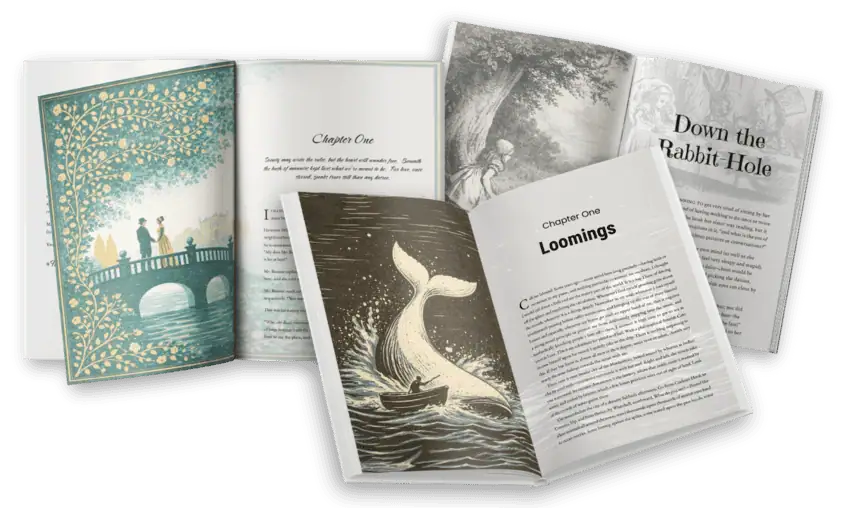
Just because a book was written a long time ago doesn’t mean every version of it is public domain. And just because a story is public domain in one country doesn’t mean it’s public domain everywhere else. You always have to look at when it was published, where it was published, and exactly which version you’re using.
If you’re planning to publish public domain books, this step matters more than anything else. Get it wrong, and Amazon can remove your book or ask you to prove that you have the right to publish it.
Selling Public Domain Books on Amazon (and Why It’s Different)
Yes, you can sell public domain books, but not on every platform.
Some marketplaces either restrict public domain content heavily or don’t allow it at all, so it’s always worth checking a platform’s rules before you commit to publishing there.
The good news is that Amazon does allow public domain books. But this is where a lot of confusion (and frustration) starts.
Amazon treats public domain books very differently than original works.
If a public domain book already exists for free somewhere else (and many of them do), Amazon doesn’t want its store filled with identical copies of the same text. Because of that, they require public domain books to be clearly differentiated before they’ll approve them.
In other words, simply uploading the raw text of a public domain book usually isn’t enough.
Amazon expects you to add real value to the work. That can take a few different forms, such as original annotations or commentary, meaningful educational framing, original illustrations, or a thoughtfully adapted version that goes beyond basic formatting changes. Cosmetic tweaks alone (things like new fonts, spacing, or a lightly rewritten introduction) are often not sufficient.
This is one of the most common mistakes people make.
They assume that because a book is public domain, Amazon will automatically approve it. But from Amazon’s perspective, “public domain” doesn’t mean “no rules.” It just means the copyright isn’t the issue. Quality, originality, and customer experience still matter.
Amazon may also ask you to prove that a work is in the public domain. That usually means providing documentation showing when and where the original work was published. If you can’t do that, your book may be rejected or removed until you can.
And while other marketplaces may be more relaxed, Amazon is not. It has become increasingly strict about low-value or duplicate public domain content, especially when readers can already access the same material for free.
This doesn’t mean publishing public domain books on Amazon is a bad idea, but it does mean you need to approach it intentionally. If you’re going to publish a public domain book, it needs to offer something genuinely useful or different — something that gives readers a clear reason to choose your version over the many others already out there.
Can You Copyright Differentiated Public Domain Books?
You can’t copyright a public domain book itself, but you can copyright the original work you add to it.
That includes things like original illustrations, annotations, commentary, summaries, study guides, or any other material you personally created. Those additions are your intellectual property. The underlying public domain text is not.
Some authors assume that once they’ve “differentiated” a public domain book, the whole thing becomes copyrighted. It doesn’t. Only the new material you contributed is protected.
Because of that, it’s a good idea to be clear about what you’re claiming rights to and what you’re not. Many publishers include a simple disclaimer at the front of the book to avoid confusion.
For example:
This work is based on a public domain text. All original content in this edition, including commentary, annotations, and illustrations, is © [Your Name], [Year]. The original text remains in the public domain.
That kind of statement makes it clear to readers (and to platforms like Amazon) exactly what you’re claiming ownership over and what you aren’t.
How to Publish and Sell Public Domain Books
Okay, so now that we know what public domains are, copyright laws surrounding them, and the rules for publishing one on Amazon, let's breakdown the steps you should take if you decided to self-publish and sell public domains:
Step 1: Finding Public Domain Material
Our first step is to build a list of potential public domain books to publish. The key here is not to go after some of the famous ones you already recognize, like The Art of War. Those tend to be extremely competitive and are often already saturated with versions on Amazon. Instead, look for books that have some notoriety but aren’t overrun with competing editions.
There are a number of terrific resources out there that provide public domain content. Just keep in mind that even when using trusted sources, it’s still your responsibility to verify that the specific work and edition you’re using is truly in the public domain.
Here are some of the best places to start:
- Project Gutenberg: This site has over 75,000 public domain ebooks and is by far the best resource on this list. If you can’t find a public domain title here, there’s a much lower chance of finding it elsewhere, with a few exceptions. It’s also where I get most of my public domain books.
- Archive.org: Another great resource with tens of thousands of public domain books, along with magazines, films, audio, and more. This is especially useful for finding original scans of books or magazines. Just note that not everything on Archive.org is public domain, so it’s important to check the copyright status of the specific edition you’re using.
- Sacred Texts: A site that specializes in religious works from a wide range of traditions. It’s one of the best resources for public domain works that are religiously based.
- LibriVox: This isn’t for ebooks or print, but it does offer audiobooks of many public domain works. While you can’t upload these recordings to ACX, they can sometimes be used as supplemental material outside of Amazon, such as on your own website.
- Authorama: Authorama focuses on classic authors and is a good place to find well-known public domain texts.
- Classic Literature Library: This site partners with Project Gutenberg and is notable for its collections of public domain works, particularly by more popular authors.
- Google Search: You’ll likely find what you need using the resources above, but there are many other niche or genre-specific archives out there. If you’re searching manually, try adding terms like “full text” or “PDF” to your search. If a work hasn’t been digitized yet but is truly in the public domain, you could have it transcribed and make it available yourself. Just be sure the source material is genuinely public domain before doing so.
Pro Tip: In my experience, publishing public domain books that are already extremely popular often leads to lower sales, since readers can easily get them from well-established sources. On the other hand, books that are too obscure can struggle for the same reason. Look for works with a clear potential audience but not too many competing versions on Amazon. There’s a sweet spot in the middle.
Now that you have a list of possible books in mind, it’s time to move on to the next step.
Step 2: Validate Whether Your Public Domain will Make Sales
After following Step 1, you should have a large list of possible public domain books you could work with. Before you begin creating anything, it’s important to validate whether there’s actual demand for that book on Amazon.
At a high level, you want to answer three questions:
- Are people searching for this book on Amazon?
- Are similar books actually making money?
- How hard is the competition?
The best way to do this is by using Publisher Rocket.
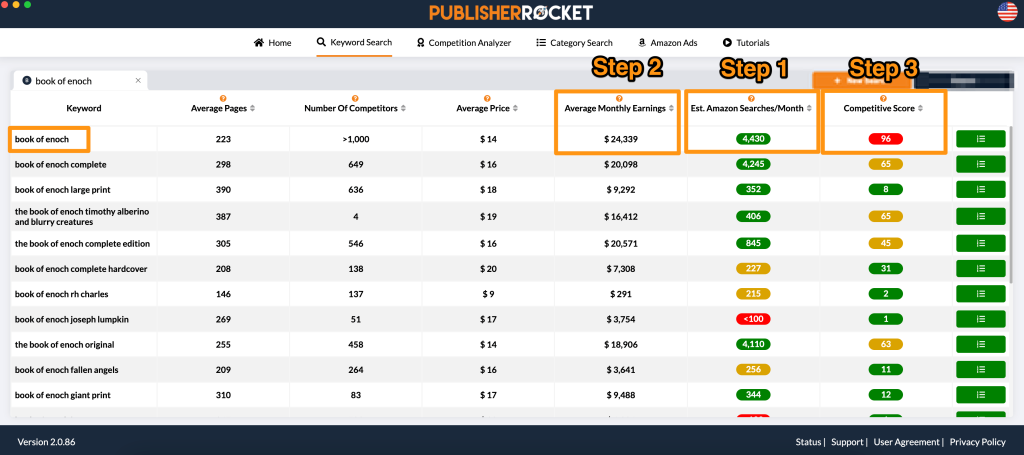
First, run a keyword search using the book’s title. Then look at the estimated Amazon searches per month. This gives you a rough idea of interest. As a general guideline, I like to see at least a few hundred searches per month. Lower numbers don’t automatically disqualify a book, but very low demand usually isn’t worth the effort.
Next, look at the existing books ranking for that title and see whether they’re making money. If people are searching for the book but the competing listings aren’t selling, that’s a signal to slow down and ask why. Is the quality poor? Are the listings outdated? Or is it a case where readers are just looking for information rather than buying the book?
This step also helps you sanity-check your production costs. Seeing what other publishers are earning gives you a better sense of whether the time and money required to produce a differentiated version makes sense.
Finally, review the competition score and take a closer look at the competing listings. How strong are the covers, descriptions, reviews, and overall presentation? Ask yourself honestly whether you could create a version that’s clearly better and more appealing to readers.
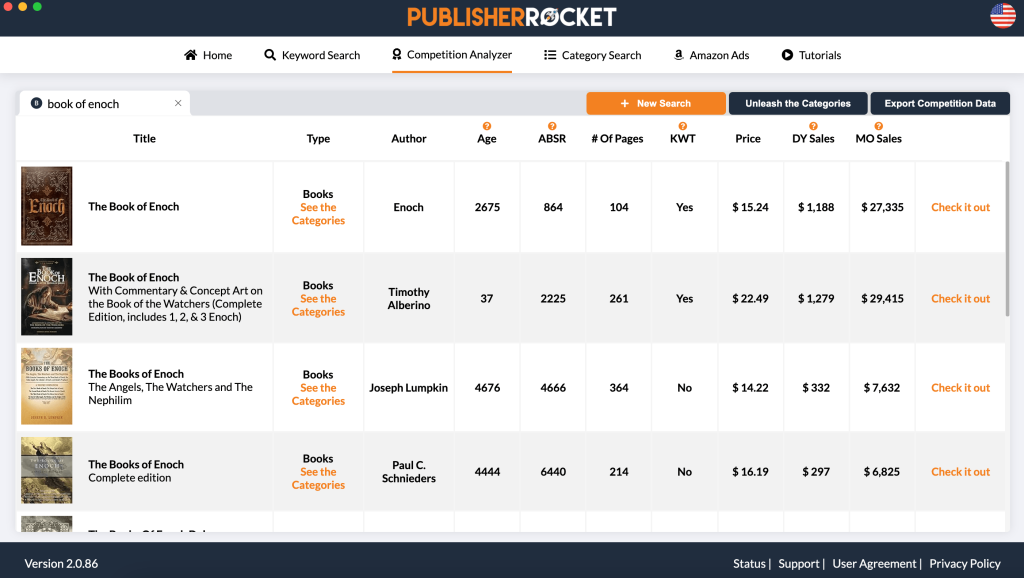
By the end of this process, you should have a much clearer picture of demand, potential profitability, and competitive difficulty. From there, you can decide which public domain books are actually worth the effort to publish, and which ones it's best to skip.
Step 3: Differentiate to Add Value
This is the part where you make a freely available book genuinely unique. Not only is this required by Amazon, but it’s also what gives readers a reason to choose your version over all the others. Since anyone can publish the same public domain text, the value you add is what sets your book apart.
As mentioned earlier, Amazon requires public domain books to be differentiated in a meaningful way (typically through translation, annotation, or illustration).
In practice, annotation and illustration tend to be the most straightforward and reliable options. Here are a few specific ways you can do that:
- Create a “modern text” version using contemporary language (making sure the translation itself is original)
- Add a glossary of terms to help readers understand outdated language
- Provide chapter summaries at the beginning or end of each chapter
- Include footnotes that explain difficult or unfamiliar words and phrases
- Hire an illustrator to create a set of simple but professional illustrations that add real context or visual interest
This isn’t an exhaustive list. The key thing to remember is that whatever you add needs to genuinely improve the reading experience and align with Amazon’s differentiation guidelines. Cosmetic changes alone usually aren’t enough.
Collections can also be a good way to add value. While a collection by itself generally isn’t considered unique by Amazon, combining multiple works with original annotations, commentary, or illustrations can make the overall package more appealing to readers.
One important note: Always focus on adding real value. While low-effort summaries or poorly executed illustrations might technically meet the minimum requirements, they often lead to bad reviews. And, increasingly, they can raise red flags with Amazon as well. Quality matters here more than shortcuts.
Step 4: Format Your Public Domain
This is not an easy step, but it’s an important one. Most public domain texts you find online are formatted for HTML or plain text, which means they usually look terrible when converted directly into an ebook or print PDF. Some level of cleanup and formatting is absolutely necessary.
Important: In the public domain space, you’ll almost always be competing with multiple versions of the same book. When shoppers search for a public domain title and see several options, many of them will click the Look Inside feature before making a decision. The version that looks the most professional on the inside often wins. This is where good formatting really matters.
Just keep in mind that formatting improves presentation. It doesn’t replace differentiation. You should already have your annotations, illustrations, or other value-added material planned before you get to this step.
There are plenty of formatting tools out there, but none make this process easier than Atticus.
The affordable package includes everything you need to format professional-looking public domain books, including:
- Print formatting that handles margins, trim sizes, gutters, and more
- A wide variety of chapter header themes to help your book stand out
- A custom chapter header theme builder to create a unique look
- An easy way to import your public domain text into structured chapters
- Support for both ebook and print formats
All of this comes at a one-time price of $147, which is more than $100 less than the leading alternative, Vellum, while offering broader platform support.
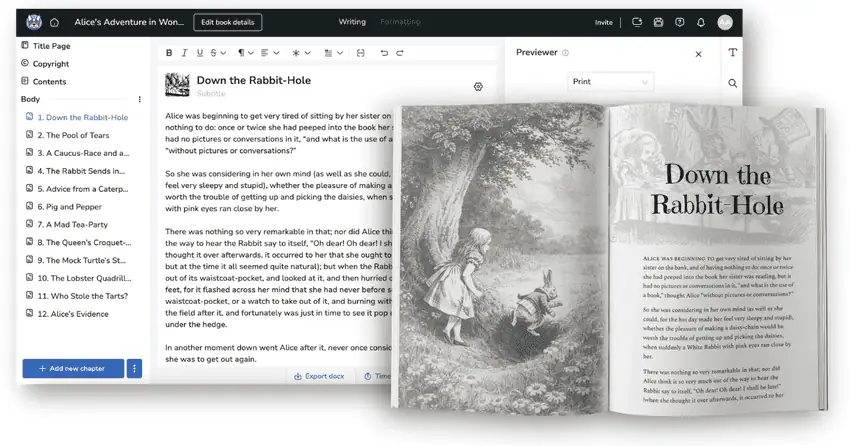
Here is how you format a public domain Here’s a simple way to format a public domain book using Atticus:
- Create a new book
- Upload your cleaned and verified public domain text (and images, if applicable), chapter by chapter
- Add any front or back matter you want to personalize the book
- Insert your differentiated material, such as annotations, footnotes, or illustrations
- Choose a chapter theme or customize your own
- Export your ebook or print-ready PDF
Once your content is ready, the formatting itself is a straightforward process and can often be completed fairly quickly.
Atticus is a practical solution for authors who want to format public domain books efficiently without juggling multiple tools. It works on Windows, Mac, and Chromebooks, making it especially useful if you plan to produce books across different platforms.
Step 5: Develop Your Cover
Your cover is another area where you can really set your book apart from the rest. Here, we recommend taking the same approach you would with any book: understand the genre and design accordingly. This gives you the opportunity to take an older work and visually “update” it for modern readers.
A strong cover won’t replace proper differentiation, but it plays a big role in how readers perceive quality, especially when they’re choosing between multiple versions of the same public domain title.
Where to Get a Cover
If you have design skills, you can absolutely create your own cover. If not, hiring a designer is often worth the investment. Since commissioning a unique cover for every book can add up quickly, one strategy we recommend is using a templated cover approach.
With a solid template and basic skills in Photoshop, Canva, or similar tools, you can swap out images and titles while keeping a consistent visual style. This also helps with branding if you plan to publish multiple public domain books under the same name.
That said, templates aren’t a one-size-fits-all solution. Different genres still need different visual treatments. For example, you wouldn’t want to use the same template for Pride and Prejudice that you’d use for Frankenstein. Use templates as a starting point, not a shortcut.
Covers don’t have to be expensive to be effective. What matters most is that they look professional and match reader expectations for the genre.
Some great places to get covers include:
You should also check out Kindlepreneur's guide on how to design book covers.
Step 6: Launch Your Public Domain Book
Once you’ve differentiated your book, formatted it properly, and added a professional cover, you’re ready to publish.
The publishing process itself is almost identical to publishing any other book through KDP, with one important exception. During setup, you’ll be asked whether your book is a public domain work.

When you see that option, select “This is a public domain work” and then continue through the rest of the process as normal.
(If you need a walkthrough of the general KDP steps, our guide on publishing a book to Amazon is a good one to bookmark.)
Pro Tip: When setting your price, you’ll notice that Amazon only offers the 35% royalty option for public domain books. Amazon does not currently allow the 70% royalty option for public domain content, which affects pricing strategy.
Because of that, many publishers choose to price public domain books at $0.99. This keeps the price competitive, lowers friction for buyers, and aligns with what readers often expect when multiple versions of the same public domain book are available. It’s not the only pricing strategy, but it’s a common and practical starting point.
After you submit your book, Amazon may email you asking for proof that the work is in the public domain. This usually involves providing details about the original author (and sometimes the translator) such as names, publication dates, or dates of death.
For very old works, this is often straightforward. But newer translations, authors who died less than 70 years ago, or works with unclear publication histories can trigger additional questions. In those cases, it’s normal to go back and forth with Amazon until they’re satisfied.
Occasionally, Amazon may ask you to adjust small details in your listing or provide additional clarification. They take public domain publishing seriously, so patience and thorough documentation go a long way here.
Case Study: Letters to Cicero
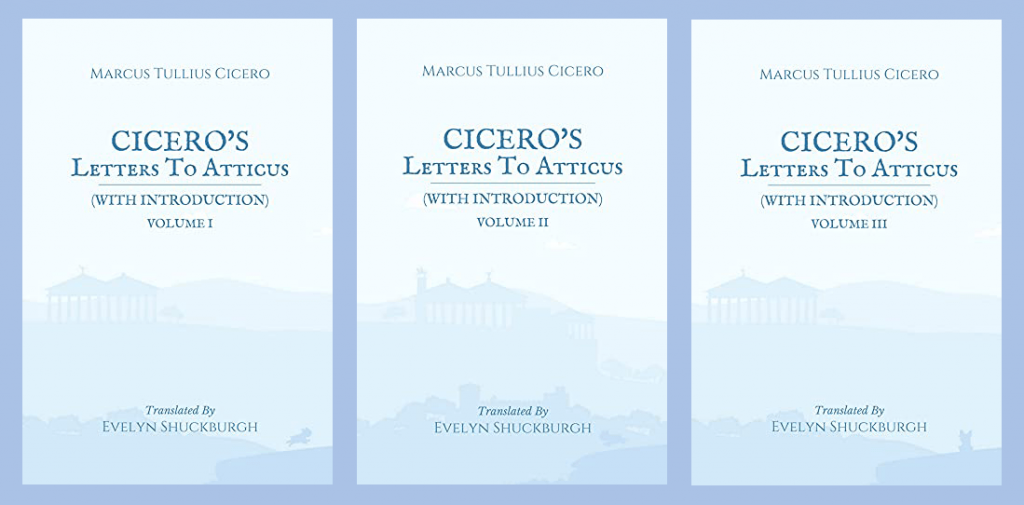
A few years ago, around the launch of Atticus, we used a public domain text as a real-world test. We formatted Letters to Cicero, published it on Amazon, and let it sit. No ads, no promotion, no launch strategy.
Within a few days, it started making sales.
Over the next few months, those sales were enough to cover the cost of Atticus. And that was with just three public domain books and no marketing at all. It wasn’t explosive growth, but it was consistent.
If you scale that approach (adding more carefully chosen, well-produced public domain titles), the numbers can start to add up. Especially when each book builds on the same systems and formatting workflow.
If the price of Atticus gives you pause, this is why I don’t worry too much about it. Compared to other formatting tools, it’s significantly more affordable, and it doesn’t take many public domain books to earn that cost back if you approach them thoughtfully.
I’ve published several public domain titles formatted with Atticus over the years, and for me, the tool paid for itself relatively quickly. In both my own case and with the Cicero books we published, those early sales came without any active marketing. Just solid presentation and existing reader demand.
That kind of outcome isn’t guaranteed, of course, but it’s realistic. And it’s exactly why public domain publishing can be such a practical long-term strategy when it’s done right.
The Bottom Line: Publishing Public Domain Content
It is a truth universally acknowledged, that a classic book in possession of a good audience, must be in want of a publisher.
(See what I did there?)
For many authors, publishing public domain books is another way to diversify income and build a backlist without starting from scratch. The hardest part (writing the original book) has already been done. What remains is selecting the right works, adding real value, and presenting them professionally.
Public domain publishing probably won’t make you rich. But with thousands of eligible titles and relatively low production costs, it can be a practical way to experiment, learn, and potentially earn back the cost of tools like Atticus.