So when most people think about worldbuilding, their mind jumps to the fun stuff. Fantasy maps. Magic systems. Made-up languages. Ancient kingdoms and weird religions and all the pieces that make a fictional world feel like its own thing.
And look, that's part of it. But here's where I think worldbuilding trips people up: writers treat it like homework they have to finish before they're “allowed” to start the actual story. So they build out entire histories, governments, trade routes, family trees, weather systems… and after a while, the world has way more documentation than the book has chapters.
I get why. Worldbuilding is fun. There's something satisfying about figuring out how everything connects and making a world feel bigger than what's on the page. But here's the thing, readers don't care how much you built behind the scenes. They care whether it feels real while they're reading it.
See, the actual point of worldbuilding isn't the map or the history. It's giving your story a place that feels like it existed before page one and keeps going after the last chapter. Could be an invented universe. Could be a fantasy kingdom. Could just be a small town with its own habits and secrets and unspoken rules.
So in this article, I'm walking through 15 worldbuilding tips to help your story feel real, without burying it under a bunch of details nobody asked for.
The mistake most authors make with worldbuilding
Most authors don't struggle with worldbuilding because they're short on ideas. If anything, it's the opposite problem. They've got too many ideas, too many directions to go, and they try to build everything at once instead of figuring out what the story actually needs.
Here's what I see a lot: writers start building the world before they've locked in the story. So they'll spend weeks on maps, magic systems, political structures, full-blown histories… and a lot of that never makes it onto the page in a way that matters to the reader.
And once that work is done, you've got a new problem. You spent all that time on it, so now you want to use it. You start hunting for places to explain things, to add context, to show off how everything works. The story doesn't collapse, but it gets heavier. You can feel it slow down.
Readers aren't looking for a fully documented world. They want a believable one. They want to feel like there's depth behind the setting, but they don't need to see all of it. Honestly, the more you explain, the more you risk yanking them out of the story instead of pulling them further in.
So instead of treating worldbuilding as something you finish ahead of time, think of it as something that shows up as the story needs it. You build what the scene requires, when it requires it. A handful of well-placed details will do more for immersion than twenty pages of backstory ever will.
Once you start looking at it that way, deciding what stays and what goes gets a lot easier.
How to approach worldbuilding (without overcomplicating it)
Once you stop trying to build everything upfront, worldbuilding gets a lot more manageable.
What tends to work better is thinking of it less like a separate phase of writing and more like something that develops alongside the story. You’re not sitting down to design an entire world in one go… you’re making decisions as you go, based on what the story actually needs in the moment.
That shift alone solves a lot of the common problems. You’re less likely to overbuild, less likely to force explanations in where they don’t belong, and more likely to focus on details that actually matter to the reader.
At that point, it’s really just a matter of knowing what to pay attention to and how to use it. Not everything needs the same level of depth, and not every detail deserves time on the page.
The ideas below aren’t rules so much as patterns. These are the things that tend to show up in stories where the world feels real without getting in the way.
1. Draw from real-life cultures
This is a great starting point for sci-fi and fantasy writers. To maintain realism and logic within your world, you may want to draw inspiration from real-life cultures and societies.
This may include:
- Creating geography similar to real-world geography
- Keeping the tech level similar to one point in real-world history
- Giving your religions a real-world flavor
- Using real-world events to inspire your world’s backstory
- Establishing international relationships similar to in the real world
Let’s take it a step further. You could make your world very similar to real life with 1-3 significant difference(s). This is especially applicable to alternative histories.
A great example of borrowing from real-life cultures is A Song of Ice and Fire, the basis of HBO’s Game of Thrones. Author George R.R. Martin drew inspiration from the United Kingdom (Westeros), ancient Rome (Valyria), Greek city-states (9 free cities), the Mongolian Empire (Dothraki), Africa (Sothoryos), Asia (Yi Ti), and so much more.
This not only gave Martin’s world a real-life flavor that arguably raised the stakes of the central conflict because it feels more like the real world to readers. This also ensured that Martin’s world history, geography, international relations, etc., were realistic.
2. Invent strange customs that hook your reader
When you invent strange customs that differ from the real world, a reader naturally remembers that peculiar custom. Use these interesting differences to hook your reader.
A great way to hook your readers with this piece of worldbuilding is by establishing similarities to the real world in your first chapter, only to introduce a bizarre quirk in your fictional society at the end of the first chapter. This is a great hook that makes your readers want to keep reading.
J.K. Rowling’s Harry Potter is full of strange customs that set magical beings apart from Muggles. Off the top of my head, I can think of 8 examples of strange customs that hook the reader:
- The fact that there’s a magic school, even for magical beings who don’t know they’re magical
- Parseltongue, the mysterious language of Salazar Slytherin
- Not saying Voldemort’s name
- A magical world parallel to the real world, like Diagon Alley or St. Mungo’s
- Classes such as Potions and Defense Against the Dark Arts
- Arthur Weasley’s flying car
- House elves and how to free them
- Owls as messengers
You are probably thinking of a dozen more right now.
3. Craft a religion and consider how it affects society
You can craft a religion for your fictional world, but consider how it affects society.
Ask yourself these worldbuilding questions about your fictional religion:
- Do a majority of citizens follow this religion?
- How do people treat “atheists” or followers of different religions?
- Has this religion influenced the government/laws?
- Will religious officials hold a high position in social circles?
- Are religious officials full of crap, completely genuine, or somewhere in between?
- Is this religion tolerant of other faiths, or does it justify force against heathens?
- How does this religion contribute to character arcs and central themes?
If your religion does not affect your main plot, I recommend ignoring it — perhaps mentioning it 2-3 times in the text.
Also, it’s good to realize that a story with 3 interrelated religions will connect to the reader better than a world with 50 detailed religions. Stick to what is important to your characters and theme.
Beware — if you create a religion similar to a real-world religion, the reader will automatically assume you are making a statement on the downsides or benefits of the real-life religion. Most authors like to stay away from controversy, but some may welcome it.
4. Construct a magic system
This is a big one. Constructing a solid magic system, particularly for fantasy but also applicable to sci-fi, is the most critical worldbuilding element for a surprising amount of readers. Make sure you construct a magic system that is satisfying and makes sense within your world.
“Magic doesn’t make sense,” I hear you say, “so I can do whatever I want with my magic.” Please, do not use your magic system to introduce a deus ex machina (god from the machine). That is when unestablished magic saves the day in the last moment.
If what saves the day is not set up beforehand, it is not a twist — it is a letdown.
There is a spectrum of magic systems, and most fictional worlds fall pretty close to one end or the other.
- At one end of this spectrum are hard magic systems. This is where the rules of magic are well-defined, as are the limitations and the cost of the magic.
- At the other end of the spectrum are soft magic systems. This is where readers (and maybe even the characters) don’t know the rules, limitations, or cost of magic.
Either a soft or hard magic system is acceptable. Both have their advantages.
If you use a hard magic system, I recommend maintaining some mystery, even if readers understand most of how magic works. Also, make the cost or limitation of the hard magic high-stakes. For instance, if a character can resurrect whomever they like, make that cost them someone else’s life.
If you use a soft magic system, I recommend setting up how the mystical, unexplained magic will save the day during the climax. Otherwise, readers will feel like you, as the writer, cheated.
For instance, hint that the day-saving magic is possible early on when the character is first discovering the soft magic.
The Lord of the Rings is a great example of a soft magic system. Not only is the story told from the point of view of non-magical beings, but Middle Earth’s magic is also very undefined.
Readers do not understand J.R.R. Tolkien’s magic system’s rules, making it more mysterious and wondrous.
Brandon Sanderson’s Mistborn series shows us how to pull off a hard magic system. Sanderson actually popularized the terms “hard and soft magic systems” after finding that his hard magic system full of defined rules and restrictions wasn’t the only way writers wrote magic.
Season 1 of The Legend of Korra (the sequel series to Avatar: The Last Airbender) does a great job of showing the societal consequences of its magic system. Some people are born with magical bending abilities, and some aren’t.
It’s random. Once the world enters the Industrial Era, non-magical people in this world use electronics to fight against benders.
5. Decide which occupations this society most values
This is a clever worldbuilding tip I heard a few years ago, but people don’t often talk about it. Decide which occupations this society most values.
This helps you figure out what jobs to give your characters, depending on how much power or stature you want to give a character.
If your fictional society values farmers, make the protagonist long for the life of a farmer. If they do not value farmers at all, make your main character a farmer who wants to break free of the oppressive caste system.
I recommend giving your antagonist a more valued occupation than your protagonist to create both an inherent conflict and an underdog status for your hero. Readers root for underdogs.
6. Figure out how their laws differ from the real world
When you’re worldbuilding, figure out how this new world’s laws differ from the real world.
Ask yourself what laws, customs, and legal processes could be significant to your story and characters.
A disturbing yet gripping example is George Orwell’s 1984. Orwell created a whole set of laws that differed from most real-world governments.
Although pundits often comment on how this government or taking on the terrifying big brother aspects of 1984’s government, I promise you it’s a (slight) exaggeration.
In 1984, the Party has created a system that cannot be taken down. No rebellion can arise to topple the Party because of its myriad “laws” that prevent opposition.
7. Give every significant location memorable geography
Give each significant setting in your story some memorable geography. Even if it’s just a sentence or a paragraph of description, unique rock formations, natural resources, strange flora and fauna, or unique architecture can really stick in readers’ memories.
Describing memorable geography associated with a significant location is shorthand for that location being important. Readers subconsciously understand that the author is spending extra sentences describing the setting because this location is significant.
Don’t abuse this shorthand. If you spend a lot of time describing a location that ends up being insignificant, you will lose credibility with readers. They will begin to mistrust you as the author to only share information necessary to the plot, characters, and central themes.
Robert Jordan does this in Eye of the World, the first book of the Wheel of Time series. He goes into such rich detail that every major location in his fantastical world sticks in readers’ memories long after they put down the book.
There are a bunch of fantastic resources out there for creating your own fantasy or sci-fi map. I think inkarnate.com is probably the coolest free service for making a fictional map.
8. Write down a detailed history of your fictional world
Mainly for your benefit, write down a detailed history of your fictional world. This can be a single page or 20 pages — whatever you think up.
Recent historical events are especially helpful to write down.
You’re probably not going to use all or most of this history. In fact, I recommend you don’t.
However, readers can tell when you’re making stuff up as you go along or if you don’t have any details about your world’s history outside what you’ve directly mentioned.
Don’t begin your book with a prologue where you describe the entire history of your world. No one likes that, and you will lose readers.
Also, make sure your book occurs in the most exciting place in time. If your world history is more interesting than current events in your story, consider setting your account entirely in the past.
In execution, it’s all about using subtext to create a world that feels lived-in.
9. Hint at worldbuilding details during dialogue
When you hint at world building details within character dialogue, it creates a mini-mystery that makes readers ask what they’re not saying or what else there is to learn. Well-written dialogue is also a natural method to reveal worldbuilding significant to the characters.
Don’t make the dialogue unnatural. If it helps, read the dialogue aloud or have someone read it for you to hear how natural it sounds. You could even use dictation software or other transcription services to hear a computer read it back to you.
If you need a few pointers, check out Kindlepreneur's article on How to Format Dialogue.
10. Consider if a change in culture could drive your story
If you’re putting so much time and effort into your worldbuilding, consider if a culture change could drive your story.
Don’t be afraid to make your culture worse by the end of the story if it contributes to your central theme.
Perhaps your fictional world could feature unjust aspects that your main characters are trying to overcome.
For example, Katniss Everdeen’s allies in Suzanne Collins’s Hunger Games are trying to topple the status quo, the government, and the last 75 years of culture.
Because the society of Panem is unjust, readers are invested in both the worldbuilding and the struggle to overcome the unjust society.
11. Determine the world’s technology level
It’s essential to determine your fictional world’s technology level. Readers who invest in your world and your characters will notice anachronisms.
Gunpowder has been around for a while, but you may not want firearms in your fantasy story of knights and dragons. It’s probably wise to align your world’s technological advancements with real-life eras.
For fantasy books, it’s typical to line up your imaginary world with a specific era in real-world history, most often the high middle ages in Europe (1100-1300).
However, non-Eurocentric fantasies are growing in popularity, so you may want to consider other eras from other regions here on Earth.
12. Start with your characters
Readers care about characters above all. Instead of creating your fictional world from a void, think of how the worldbuilding affects the character arc of your protagonist/antagonist.
Start with your character development. Only focus on worldbuilding that directly relates to your major characters. Don’t waste time on aspects of your world that will not influence the plot, character development, or central themes. Great worldbuilding influences all three.
For example, there’s a lot of expanded material in the Star Wars universe. However, in the Star Wars movies (especially the first three), George Lucas only focuses on the pieces of worldbuilding (galaxy-building?) that directly affect the main characters.
Here’s a handy video on how to bring your characters to life:
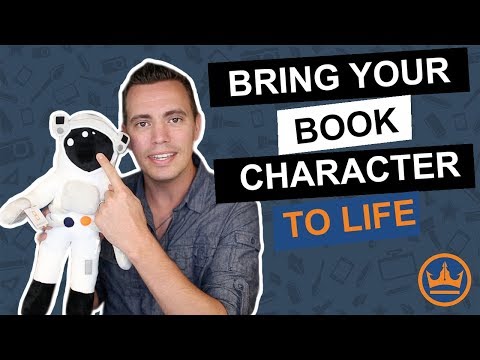
Want more videos like this one? Subscribe to my YouTube channel today!
13. Avoid idioms from the real world
If you’re telling a story that doesn’t take place in the real world, avoid idioms and figures of speech that developed out of real-life culture. These fictional people are probably not speaking English or any real-world language, so they would not use our idioms.
For instance, I remember my surprise when a beta reader revealed to me the etymology of the word “milquetoast.” It originated from a 20th-century comic strip. So I had to take it out of my fantasy book.
Check out this list of idioms and figures of speech in the English language to decide whether your fictional characters would say them or not.
Create new idioms and figures of speech. You may think of several fantasies where characters shout, “Oh, gods!” as a curse because of polytheism. Or, idioms may refer to historical figures from your fictional world.
I think of Isaac Asimov’s Foundation series where characters say, “Galaxy!” as if it’s a curse. Early on in the Foundation’s history, scientists convinced people that the Galactic Spirit is a deity who makes technology work.
14. Only use 10% of your world building
Like an iceberg, you should only use 10% of your world-building while implying the other 90%.
First of all, don’t overload your readers with information that won’t directly affect your major characters.
On the other hand, it’s good to subtly imply that there’s a bunch of world building that you as the author are withholding. The reader will either wonder about the rest of the world (mysteries are the best motivations to turn the page) or thank you, the author, for sparing them unnecessary information (building your credibility).
I know — you spent a very long time crafting your fictional world. However, no one will want to read about it if it doesn’t directly relate to your principal character arcs.
Brandon Sanderson says that after you create your world, choose 2-4 worldbuilding elements to explore in your story and leave the rest to subtext and background.

This not only improves the effectiveness of your storytelling because readers are more likely to cling onto 2-4 important elements rather than 10-20 worldbuilding elements. It also allows you to write more books because only choosing 2-4 elements reduces your time writing each book.
15. Don’t over plan if it delays the book
Please do not over plan the worldbuilding of your story if it delays you writing the book. The ultimate goal is to write a (good) book. If worldbuilding gets in the way, then it isn’t serving your overall goals.
If you haven’t completely finished building your fictional world by the time you start writing, that's okay! You can continue to develop your world after you’ve begun writing.
Final Thoughts on Worldbuilding
Worldbuilding can make a story feel bigger, richer, and more believable, but it can also become one of the easiest ways to avoid writing the book. That’s the part worth watching out for. If you’ve spent weeks designing systems, histories, maps, and social rules, but you still don’t know what your main character wants in chapter one, the worldbuilding probably isn’t helping yet.
The goal isn’t to build the most complete world possible. It’s to build enough of the world that the story feels grounded while the reader is moving through it. A strange custom, a specific law, a social pressure, a piece of history everyone avoids talking about, or a detail about how people live day to day can often do more than several pages of explanation.
So if you’re stuck, try narrowing your focus. Ask what the reader needs to understand right now, what affects the character directly, and what details make the conflict sharper. Anything beyond that can usually wait.
You can always build more later. For now, give the reader enough to believe the world is real, then let the characters do something interesting inside it.