Coloring books are easy to underestimate because they don’t look like “real” books in the way a novel or nonfiction book does.
There’s no plot to wrangle, no character arc to fix, no chapter structure to organize, and no giant manuscript sitting there making you question every decision that brought you to this point. So it’s tempting to look at coloring books and think, “Okay, this should be pretty simple. Pick a theme, get some art, upload the thing to KDP, and move on.”
And to be fair, the publishing part is fairly simple. Once you have a print-ready file, uploading a coloring book to Amazon isn’t all that different from uploading any other paperback. Where people tend to get into trouble is everything that happens before that. They pick a niche without knowing whether readers are searching for it, spend money on illustrations before they’ve tested the idea, use a cover that doesn’t compete with what’s already selling, or format the interior in a way that looks fine on screen but falls apart once it’s printed.
That’s why I wouldn’t start this process by opening Canva or hiring an illustrator. I’d start by figuring out what kind of coloring book you’re making, who it’s for, and whether there’s enough demand to justify the time and money you’re about to put into it.
The art matters, of course. In a coloring book, it matters a lot. But the art is only one piece of the product, and if the niche, cover, formatting, or marketing is off, even good artwork may not be enough to save it.
So in this article, I’ll walk you through how to publish a coloring book from the research stage all the way to getting it live on KDP. We’ll look at choosing a niche, putting together the artwork, formatting the interior, publishing the book, and doing some basic marketing once it’s available.
I’ll also show you where tools like Publisher Rocket and Atticus can make the process easier, especially if you’d rather not guess your way through the parts that can be researched ahead of time.
What kind of coloring book do you want to create?
Before you dive into publishing, it helps to know which type of coloring book you're making.
Most fall into one of two categories: books for kids or books for adults.
#1. A coloring book for kids
Children’s coloring books are the most familiar (and the simplest to produce).
They’re typically made up of:
- Simple, bold illustrations
- Large open spaces for easy coloring
- Occasional educational text beneath each image
- Fewer total pages
Because the artwork is straightforward, these books require less time and detail from an illustrator, which also makes them more affordable to create.
#2. A coloring book for adults
Adult coloring books are more intricate. They often feature detailed patterns, complex designs, and themes geared toward mindfulness, relaxation, or creativity.
Popular styles include:
- Geometric and mandala patterns
- Florals and nature scenes
- Animals
- Architecture
- Fashion
- Comics or manga art
- Inspirational designs with quotes
- Zendoodles and abstract patterns
- Mixed-style pages
These books take more time and effort to produce, but they serve a loyal and growing audience. Many adults use them for stress relief or as part of a wellness routine.
There’s strong potential in both markets, but the key is research. Before you start designing, make sure there’s demand in the niche you’re targeting.
How to publish a coloring book
Once you have a general idea of what you want to create, the process itself is pretty straightforward.
It’s not necessarily easy, especially if you’re starting from scratch, but it’s a series of decisions that build on each other.
I tend to think of it less as a strict step-by-step system and more as a sequence you work through, where each part helps you avoid problems later on.
If you skip ahead or rush certain pieces, you usually end up circling back anyway.
So the steps below are laid out in the order that makes the most sense, especially if this is your first time putting a coloring book together.
Step 1: Do your research
The first step is to know what your coloring book should be about. Ideally, you want a coloring book that will sell, and for most people starting out, that means you need to pick a niche.
There are several ways to pick your niche. I’ll give you two.
The first way is to manually perform searches on Amazon and see what is available, and what niches might have room for more.
You can do this by:
- Performing a search on Amazon for something generic like “adult coloring book” and seeing what comes up in the suggestions
- Click on an option and look at the number of competitors, does it appear to be overcrowded?
- Try again with other keywords, consider adding a letter to the end of your search to see what keywords are suggested, (adult coloring book a, adult coloring book b, etc.)
- Once you find a coloring book search term that seems relatively low-competition, you want to make sure that the books are selling. You can do this by looking at the top 10 results for that keyword, finding the Best Sellers Rank, and pasting it into my KDP Rankings Tool to see how many sales it is getting per day
- Rinse and repeat for each promising-looking keyword
Now, there is actually a much easier way to do this, one where you don’t have to do so manually.
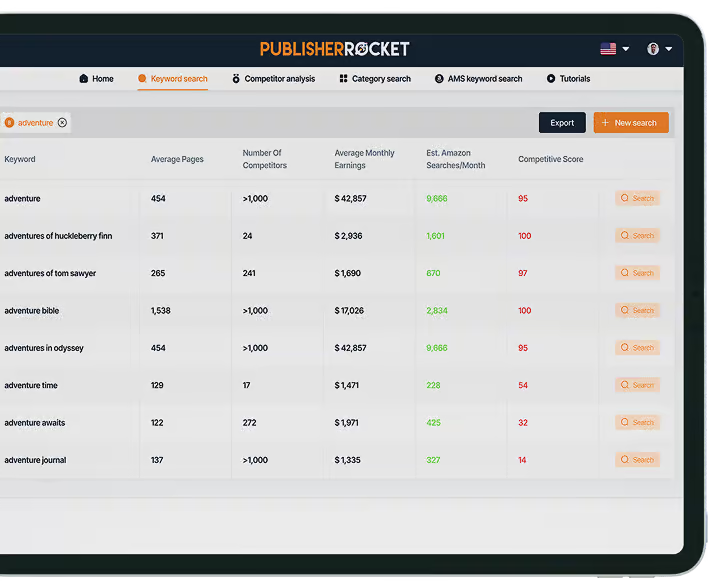
It involves using the tool Publisher Rocket to find your categories and keywords that are likely to do well.
Here’s the process I went through to find a good niche.
First, I used Rocket’s category analyzer which looks at all of the categories on Amazon. I found one called: Books > Arts & Photography > Drawing > Coloring Books for Grown-Ups > Animals.
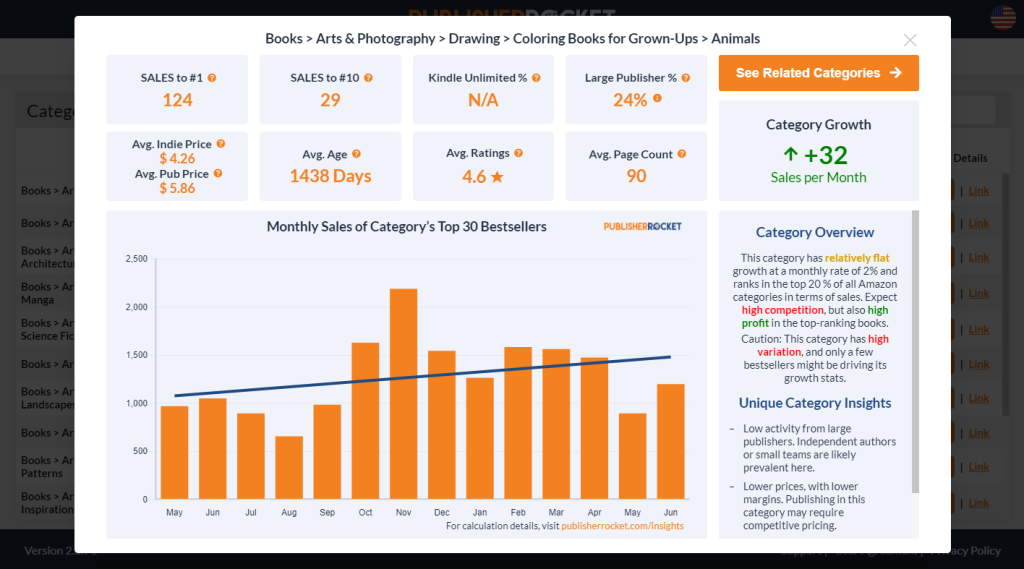
This category had decent growth, but more importantly, the insights let me know that there was a low percentage of books in this category from Kindle Unlimited or Large Publishers. Plus, the number of sales it would take to compete was relatively low.
But that’s just the overall category. What about a specific search term?
Well, once I knew that animals was a good category, I went to Rocket’s keyword search feature and began typing in “[ANIMAL NAME] coloring book” with a variety of animal names to see the results.
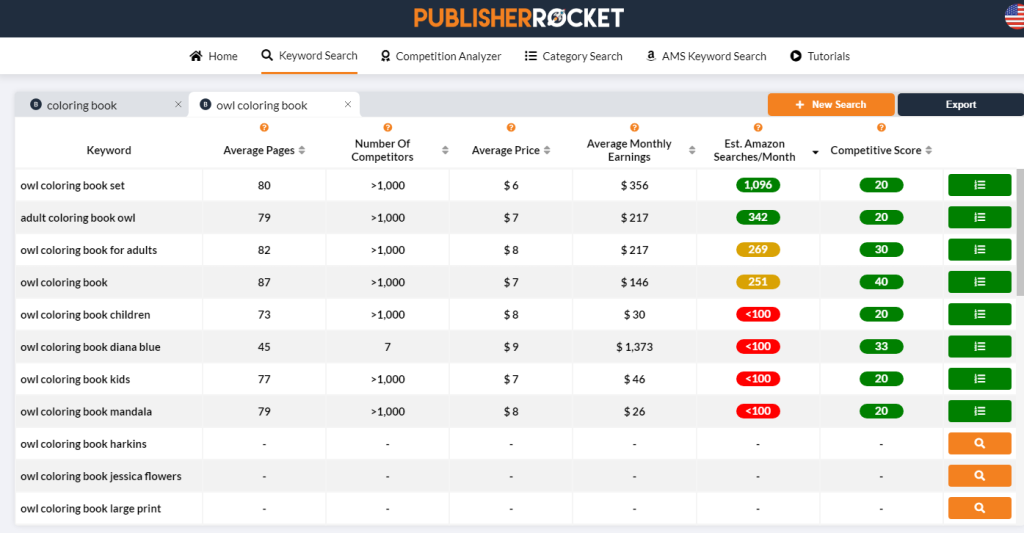
When I typed in “Owl Coloring Book” I found some really great results, which were color-coded to show me that they had a lot of amazon searches but low competition.
Rocket made it really easy and fast to find a good niche, and I actually found several others in the small amount of time it took me to prepare this part of the article.
So definitely check out Publisher Rocket if you haven’t already, because it’s a great way to simplify your coloring book research.
Step 2: Assemble your coloring book art
Once you’ve chosen your niche, it’s time to put together the art. These days, you have three main options:
- Create the artwork yourself
- Hire an illustrator
- Use AI-generated images
Each approach can work, but there are tradeoffs to keep in mind.
If you’re doing the illustrations yourself, play to your strengths. Maybe you’re great at mandalas or better suited to kid-friendly animals. Match your style to your niche so the artwork connects with the intended audience.
If you’re hiring an artist, don’t go bargain-bin hunting. A talented illustrator will dramatically elevate the final product, and that quality makes a big difference when it comes to reviews and repeat sales. You don’t need to overspend, but you do want to pay fairly.tand that only the highest quality artists will be able to deliver the best results. And the quality of the art is a HUGE factor in whether the coloring book continues to sell over time.
A note about AI art
AI-generated art has become more accessible — and it’s not going anywhere. Still, I recommend using it thoughtfully, not as a shortcut.
Yes, AI tools can produce decent results. But they’re rarely on par with what a skilled artist can deliver. Readers can tell the difference, especially in visual-first products like coloring books.
That said, there are situations where AI may be useful:
- When profit isn’t your goal: If you’re making a book for fun or as a personal project, AI can save money and time.
- When you plan to upgrade later: You might launch with AI art, then reinvest profits into professional illustrations once your book earns money.
- When it’s a bonus, not the product: AI can be handy for extras, like printable coloring pages based on your fiction books, or a freebie for your email list.
In short: if the alternative is not making the book at all, AI might be a helpful first step. But when possible, invest in a human artist. It’s better for your readers and better for the art world too.
Your coloring book cover
Your cover is what gets clicks and sells the book. It’s your most important marketing asset, so make sure it’s done right.
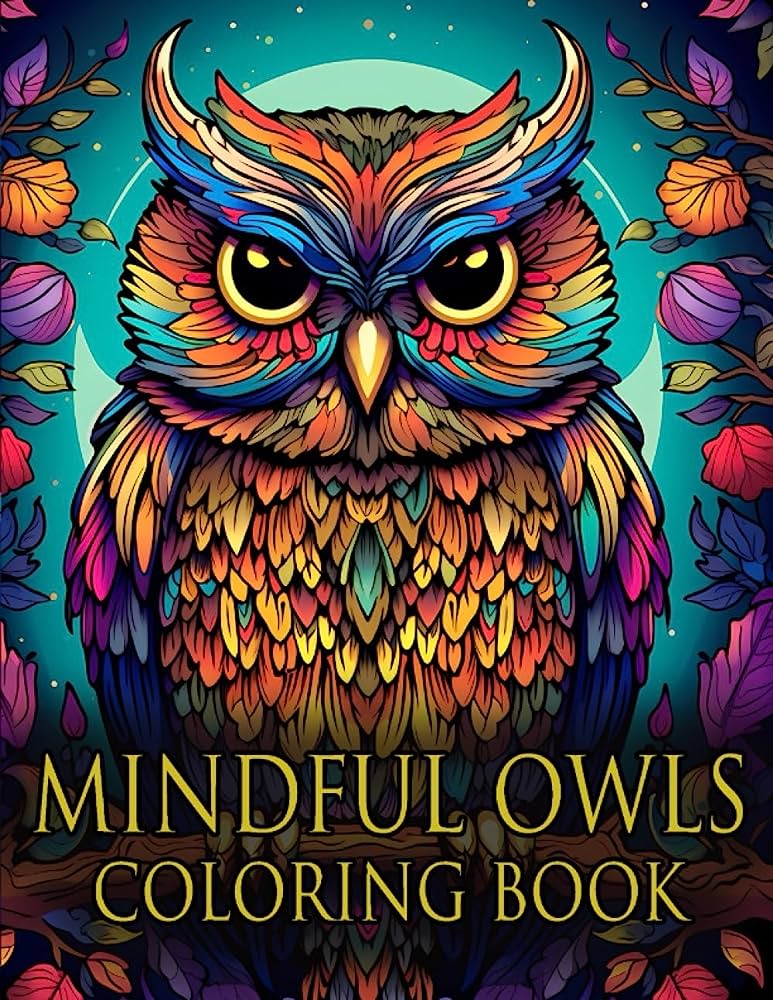
Whenever possible, hire a professional cover designer. You want a high-quality, eye-catching cover that makes it immediately clear what kind of coloring book you’re offering.
Here are a few tips:
- Don’t reuse interior art: Your cover should stand out. Use a unique image that reflects the theme — a realistic owl illustration for adults, or a fun character for kids.
- Avoid clutter: Keep it clean. Use one main image, a large readable title, and a possible subtitle (like “A Relaxing Floral Coloring Book for Adults”).
- Use bold, vibrant colors: Coloring books are visual. Covers that pop with saturated colors tend to perform best.
- Prioritize resolution: Use a high-res image to ensure sharpness when viewed at full size.
A great cover can make or break your book’s success, so don’t treat it as an afterthought.
Step 3: Format your coloring book
Next comes a tricky part for some: the formatting. Generally speaking, we’d split this into two parts:
Image formatting
With the image, you want to make sure each image is sized correctly, and that they have a uniform style.
Personally, I like to add a black border around each image to make it feel nice and uniform. These types of border can be easily added using Adobe Photoshop or Canva.
You’ll also want to make sure your image is sized for the correct trim size that you want on Amazon.
Thankfully, if you are using full bleed images through Atticus, there’s a handy tool that will tell you exactly how many pixels your image should be, which you can find here.
And speaking of Atticus…
Book formatting
Once you have your images in hand, you can add them to Atticus by adding a Full Page Image.
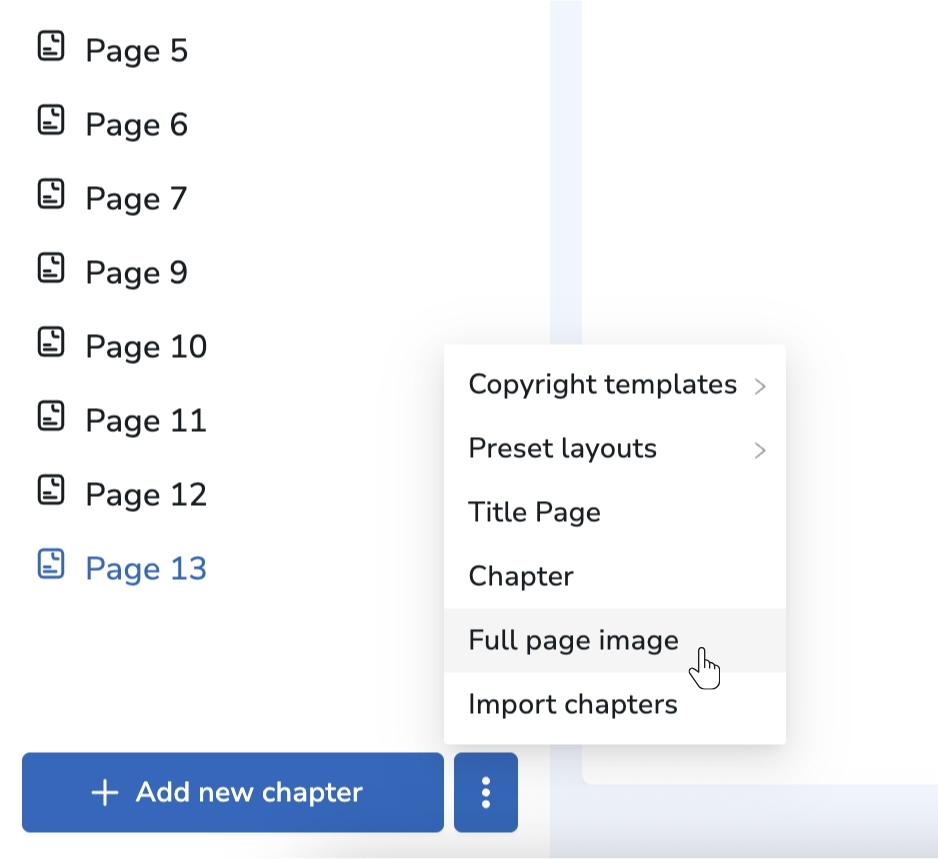
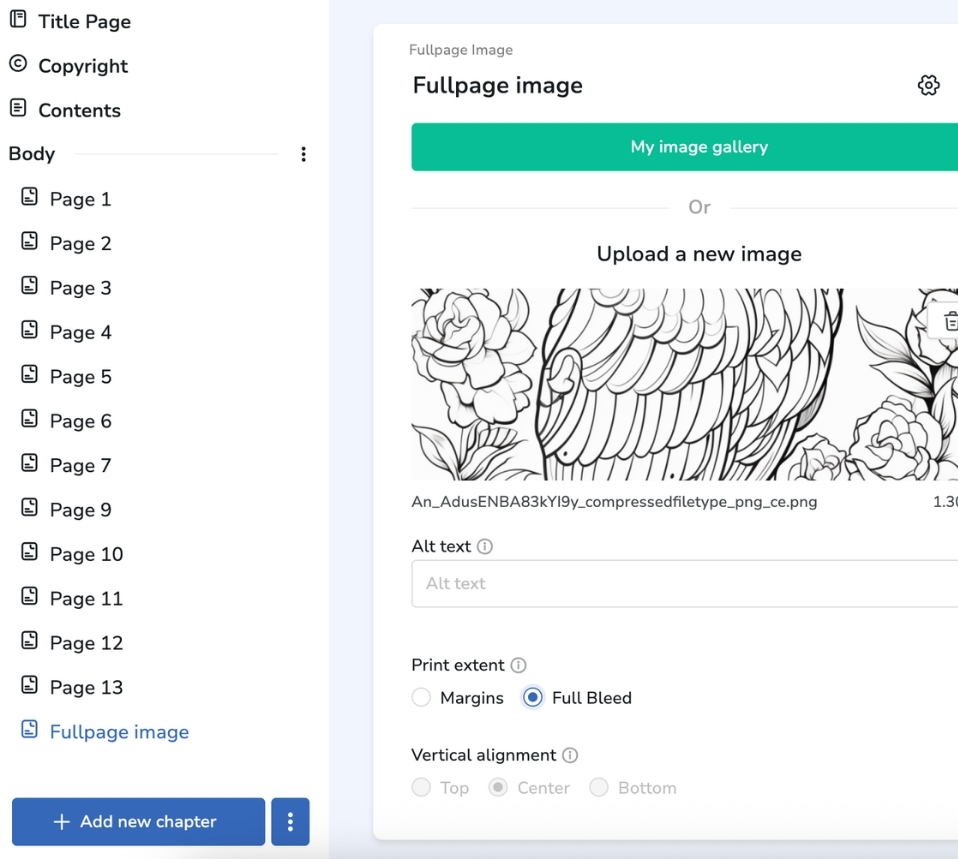
Once you’ve uploaded your photo, you’ll also want to make sure that “Full Bleed” is selected.
Then you’ll want to go to the Formatting tab and edit a theme and then, under Print Settings, make sure you have the correct trim size selected.
Once that is all out of the way it’s a simple matter of uploading the rest of your images, then exporting to a PDF, which should be automatically formatted for KDP or IngramSpark.
A note on coloring book size
Generally speaking you can use any size for a coloring book, but the most common are 8.5 x 11 inches for most coloring books, with 8.5 x 8.5 inches occasionally used for square coloring books.
The number of pages
You will at least need 24 pages to be able to use print-on-demand software. But the good news is that each page can have a blank page behind it, meaning that 20 illustrations would actually count as 40 pages.
But as for the number of illustrations, most coloring books have anywhere from 16-50.
Step 4: Publish your coloring book
Once your coloring book is assembled and formatted, it's time to publish it. In the realm of self-publishing, Amazon's Kindle Direct Publishing (KDP) is one of the most popular platforms, as it provides a simple and straightforward process. If you want to expand your reach further, you can consider other platforms like IngramSpark.
To publish your coloring book on KDP, follow these steps:
- Set up a KDP account if you don't already have one.
- Once logged in, click on ‘+ Create’ and then ‘Create Paperback.'
- Input your book details such as title, subtitle, author, description, and keywords. Don't forget to include your selected niche or theme in your description and keywords.
- Upload your formatted manuscript and cover.
- Preview your book to make sure everything looks good. Make sure to check each page carefully to ensure all images are properly placed and clear.
- If everything checks out, select your territories, pricing, and royalty plan, and then click “Publish Your Paperback Book.”
While KDP is an excellent option for many self-publishers, some prefer the wider distribution and flexibility of IngramSpark. We generally recommend you do both, as there are no upsides to going exclusive with Amazon for print titles.
A note on ISBNs
The International Standard Book Number (ISBN) is a unique identifier for books, which helps in their tracking and distribution. If you plan to sell your coloring book in bookstores or libraries, you'll need an ISBN.
However, if you're publishing through Amazon KDP, they provide you with a free Amazon Standard Identification Number (ASIN), which serves the same purpose on their platform. But remember, an ASIN only works within Amazon, so if you aim for a broader distribution, it's worth getting an ISBN.
Step 5: Market your coloring book
Marketing is an essential aspect of any book's success. We have a ton of resources to help you with this, but consider these strategies to get started:
- Social Media: Use platforms like Instagram, Facebook, Pinterest, or TikTok to showcase your art and engage with potential customers. You can post sneak peeks, completed pages, or user testimonials.
- Influencer Marketing: Partner with influencers in your niche who can showcase your book to their followers. This could be a parent blogger for a kids' coloring book or a mental health influencer for an adult coloring book, for example.
- Email Marketing: If you have an email list, send them an announcement about your new book. You can even offer a free coloring page as a teaser.
- Amazon Advertising: Use Amazon's own advertising service to target potential customers who are already looking for coloring books on Amazon.
- Collaborate: Partner with local libraries, schools, or community centers for coloring events or contests where your book can be featured.
Are coloring books still worth publishing?
Yes, coloring books can still be worth publishing, but I’d be careful about treating them like an easy shortcut into self-publishing.
They’re simple in some ways, especially compared to writing a novel or building a full nonfiction book from scratch. But they’re still products. And like any product, the details matter more than people want them to.
The niche matters. The cover matters. The quality of the artwork matters. The formatting matters. And if you’re publishing on Amazon, the research matters a lot, because you’re not just making something cute or creative. You’re putting it into a marketplace where readers already have plenty of options.
That doesn’t mean you need to overcomplicate it. In fact, I’d probably go the other direction.
Start with one focused idea. Research the niche before you spend money. Make sure the artwork fits the audience. Format the book cleanly. Then publish it, market it, and pay attention to what happens.
You’ll learn more from publishing one thoughtful coloring book than from endlessly debating whether the market is too crowded.
And if it works, great. You can build from there.
If it doesn’t, you’ll still come away with a much better understanding of how low-content and visual books work on Amazon, which is useful whether your next project is another coloring book, a companion workbook, a journal, or something completely different.