Coming up with a children’s book idea sounds easy until you actually sit down and try to do it.
After all, the book is short. The language is simple. Maybe there’s a cute animal, a funny problem, a bedtime routine, or a little lesson tucked in there somewhere.
Then you start brainstorming and realize that “simple” is not the same thing as easy.
A good children’s book has to be clear without being boring. It has to mean something without sounding like a lesson plan. And it has to be built around something a child actually wants to hear about more than once, because if you’ve ever had a kid ask for the same book five nights in a row, you know they are not casual fans. When something clicks, they are all in.
That’s where a lot of writers get stuck. They start with the message first. They know what they want the book to teach, but they haven’t found the thing a child is excited to follow. Kids usually don’t go looking for “a thoughtful story about resilience.” They want dinosaurs, trucks, princesses, dragons, bedtime, puppies, robots, bugs, or whatever their current obsession happens to be.
Parents often search that way too. They may care about the lesson, but a lot of the time they’re typing something like “books about fire trucks” because their kid has talked about fire trucks for three straight weeks and they need something new to read at bedtime.
So instead of starting with a huge, abstract idea, it helps to start with something specific a child already cares about. From there, you can build the lesson, the character, the setting, and the emotional turn around something that already has a little pull.
That’s what these prompts are meant to help with. Some are silly. Some are emotional. Some are built around common childhood experiences. But each one gives you a starting point you can shape into a story that feels fun, clear, and easy for a parent or child to understand.
Narrow your focus early
Most people come into this wanting to write something meaningful.
They’ve got a message they care about, maybe something they want kids to learn, and they start building the story around that. Which makes sense… but it’s not usually how these books get found or chosen.
Because kids don’t start with themes. They start with interests.
One kid wants anything about dinosaurs. Another is obsessed with trucks. Another wants the same bedtime story every night because something about it clicked. And when parents go looking for books, they follow that same path. They don’t search for “stories with a strong moral lesson”… they type in things like “books about fire trucks” or “princess books for kids” and scroll until something feels right.
That’s why narrowing your focus early matters so much. If your idea lines up with something kids already care about, you’re not trying to convince anyone to be interested. You’re meeting them where they already are.
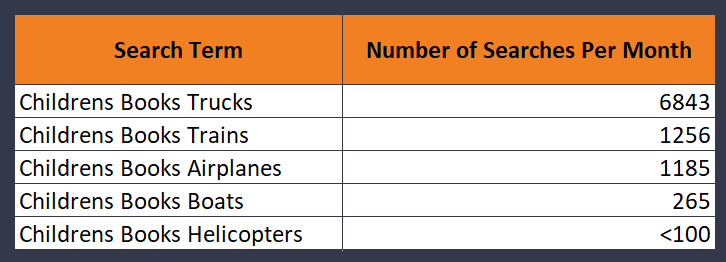
And that shows up pretty clearly when you look at search data.
Some topics get a ton of attention every month. Others barely register. It doesn’t mean you can’t write something more niche, but it does mean you’re making the job harder if no one is actively looking for it.
You can see the difference in the numbers below:
Data provided by Publisher Rocket
Once you start looking at it this way, the idea stage changes a bit.
Instead of asking, “What do I want to say?” you start asking, “What are kids already excited about… and how can I build a story around that?”
It’s a small shift, but it gives you a much better starting point.
And if you’re not sure what people are actually searching for, it’s worth taking a little time to look. The more your idea lines up with real interest, the easier everything else becomes once the book is out in the world.
Different age ranges for children's books
“Children’s book” is a broad term. It covers everything from books meant for babies to novels aimed at middle schoolers. So if you want your book to succeed, it helps to be specific about who you’re writing for.
Here’s a quick breakdown of the most common types of children’s books, along with their general age ranges:
- Board Books – Ages 0 to 3 – Very few words, mostly images
- Picture Books – Ages 2 to 5 – Around 200 to 400 words, pictures on every page
- Chapter Books – Ages 6 to 10 – 3,000 to 10,000 words, lots of illustrations
- Middle Grade Books – Ages 8 to 12 – 30,000 to 45,000 words, fewer or no pictures
Most of the prompts and ideas in this post can be adjusted to fit any of these categories, but the focus will lean toward picture books since they tend to be the most popular starting point.
Whatever path you choose, it’s important to pick an age range and stick with it. Parents are usually the ones buying the books, and they know what feels right for their kids. That’s why your story needs to be a match not just in topic, but in tone, structure, and length.
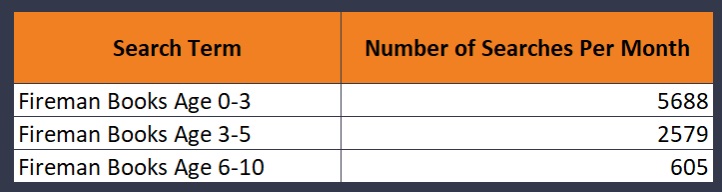
For instance, a story about tractors might perform well with younger kids, while a fantasy mystery would be a better fit for middle grade readers. The table below highlights how interest in certain topics shifts depending on the age group:
Data provided by Publisher Rocket
So if you’re planning to write about a specific subject, it pays to figure out which age range is most likely to be searching for it. Matching your idea to the right audience will give you a much better shot at success.
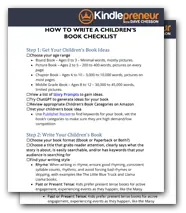
Don't know where to start your children's book? I've got a checklist that will take you through the entire process, from the initial idea to the finished, polished product. Check it out!
Trends in children's books
Children’s books are heavily influenced by trends. These trends might be seasonal, driven by popular characters, or sparked by something as simple as a new movie or show. As you plan your book, it’s smart to think about when readers will be most excited about your topic. That way, you can time your launch when demand is highest.
With a bit of research, it’s easy to see just how much timing can affect a book’s visibility. And with hundreds of children’s book categories on Amazon, there’s always something trending.
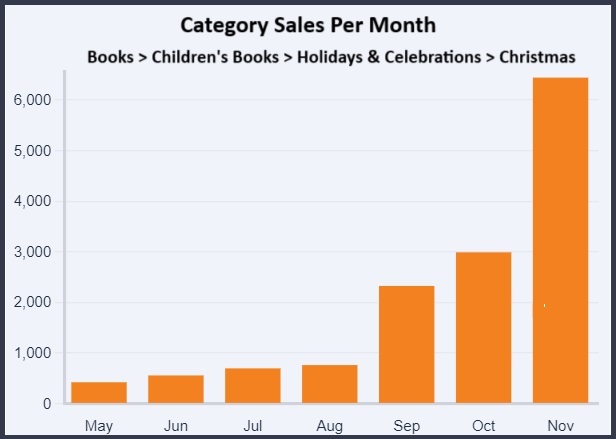
Take Christmas books, for example. Interest starts picking up in September, then climbs sharply through October and November. Parents are already thinking ahead to the holidays, and many want books to build excitement or to give as gifts. Here’s how that looks:
Data provided by Publisher Rocket
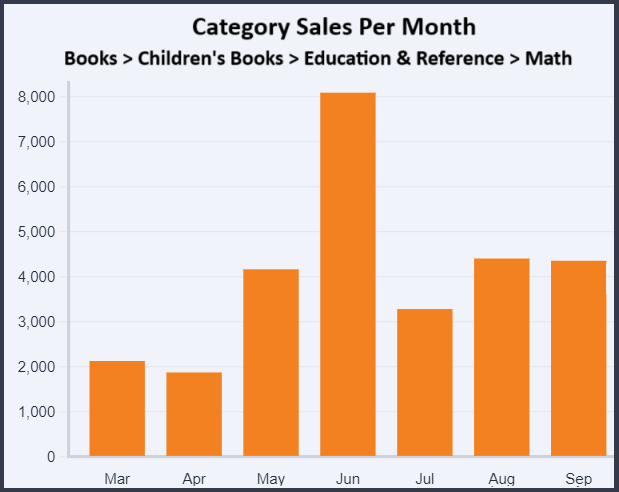
Another trend involves books about math. You might expect these to do well during the school year, but they actually peak in June. That’s right when summer break begins, and many parents start looking for ways to keep their kids sharp while they’re out of school.
Data provided by Publisher Rocket
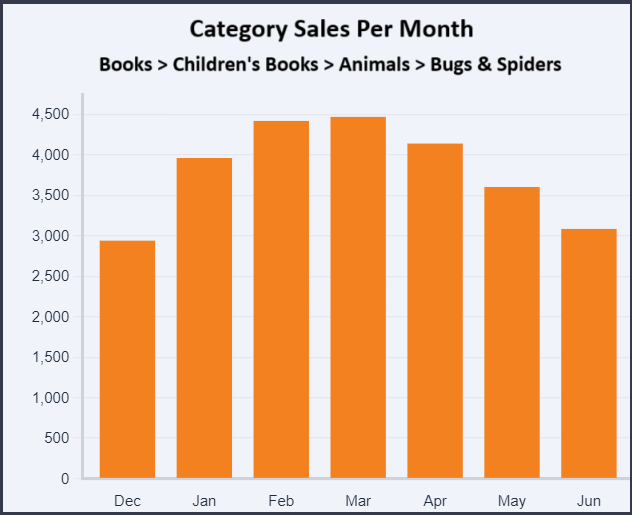
Some trends follow the seasons. Kids get curious about bugs in spring, right around the time insects start showing up again. That curiosity often turns into book sales.
Data provided by Publisher Rocket
If you want to catch a trend at the right time, start by watching the Amazon categories your book would belong to. You’ll get a feel for what’s picking up, what’s fading out, and when readers are most likely to search for your topic. And if you want to make sure your book is listed in the best categories for visibility, this guide can help.
Popular children's book themes and settings
One of the easiest ways to develop a strong story idea is to start with a theme.
This doesn’t just apply to children’s books either. Theme is often what helps shape your plot, characters, and the message you want readers to walk away with.
Below are some of the most popular themes for children’s stories:
- Friendship
- Family
- Discovery (Learning)
- Empathy
- Anger
- Courage
- Suffering
- School
- Big Changes
- Social Issues
- Teamwork
- Acceptance
- Sharing
- Holidays
- Growing Up
- Imagination
- Kindness
- Honesty
- Facing Fears
- Problem Solving
- Gratitude
- Self-Confidence
- Helping Others
- Belonging
- Making Mistakes and Learning from Them
Once you’ve picked a theme, pairing it with a strong setting can really bring your story to life. Setting gives your characters a place to move around in, and when combined with the right theme, it makes the whole idea feel more real and engaging.
Here are some popular settings in children's books:
- Farm
- Ocean
- Jungle
- Forest
- Neighborhood
- Backyard
- Park
- Mountain
- Beach
- School
- Space
- Castle
- Under the Bed
- Treehouse
- Desert
- Arctic
- Magical Land
- Playground
- Circus
- Library
Try combining one from each list. For example, maybe you want to write about friendship (theme) set in the jungle (setting).
You could create a cast of jungle animals… or follow a lost house cat who ends up in the jungle and learns how to make new friends.
See how quickly an idea starts to take shape?
Now let’s look at the different types of children’s books you can write.
Types of children's books
There are plenty of go-to categories that continue to resonate with kids and parents alike.
Some children's book authors start with a type of book and then figure out the theme and setting afterward.
If that feels more natural to you, here are some options to work with:
- ABC Books
- Dinosaur Books
- Bedtime Story Books
- Food Books
- Imagination Books
- Early Reader Books
- Sibling Books (to prepare for a new brother or sister)
- Potty Training Books
- Counting Books
- Animal Sound Books
- Holiday Books
- Seasonal Books (Spring, Summer, etc.)
- Shape and Color Books
- Books About Emotions
- Books About Trying New Things
- Books That Teach a Skill (like brushing teeth or tying shoes)
- Interactive Books (lift-the-flap, touch-and-feel, etc.)
- Books with Songs or Rhymes
As you can see, starting with a book type can quickly give your idea more structure. From there, you can mix and match with a theme and a setting.
Maybe you’ll create a Bedtime Story Book with a forest setting that’s all about facing your fears. Or maybe an ABC Book that takes place in space and highlights teamwork.
Still not sure where to begin? Don’t worry… the next section will walk you through some story prompts to get the ideas flowing.
Children's book idea prompts
- Write about an animal that moves to a strange city.
- Write about a child going to a farm for the first time.
- Write about a child learning to read with the help of a few furry friends.
- Write about an animal learning the meaning of loyalty.
- Write about a character learning to make a new friend from a different background.
- Write about a cast of animals learning how to work as a team to accomplish some goal.
- Write a story about a character learning to share their favorite toy.
- Write about a character learning to be brave amid adversity.
- Write about a kid learning the importance of honesty.
- Write about a sloth who wants to become a comedian.
- Explore the difficulty of losing a pet (or experiencing a drastic life change).
- Write about a magical box that operates on kindness.
- Write about a group of animals who must deal with human-made changes to their environment.
- Explore Halloween through a magical pumpkin and a surly scarecrow.
- Write about the power of dreams, showing the importance of getting enough sleep.
- Write about a kid who discovers a magical pair of shoes.
- Write about healthy vegetable characters and unhealthy fast-food characters.
- Explore the impact a single kind act can have on the world.
- Write about a character learning the power (both positive and negative) of technology.
- Write about a child taking care of a jellybean that turns out to be an egg.
- Explore the power of a misunderstanding — and the importance of empathy.
- Write a picture book about a character who is an aspiring photographer.
- Write a rhyming story about Freddy the Friendly Fish.
- Write about a couple of characters who make a mess and work together to clean it up.
- Explore a character learning to swim.
- Write about a character learning to not compare himself to others.
- Explore the implications of anger with a shark, hippo, or some seemingly angry animal.
- Write a story about an animal who is a picky eater.
- Write a story about wild things becoming tame over time.
- Write a story about a young girl making friends outside of her age group.
- Explore family dynamics through a family of dinosaurs trying to make it in a prehistoric world.
- Write a story about an aspiring writer learning to spell (and to use his imagination).
- Write a bedtime story about a pillow who waits all day for her chance to shine at bedtime.
- Write about a character who becomes unintentionally famous.
- Write about a character who learns a new skill that changes his life.
- Write about a character accepting the blame for something she didn't do to help a friend.
- Explore what happiness is — and what it isn't — through the main character's eyes.
- Explore how fear can be good, but also how it can be bad.
- Write about a child who accidentally invents a time machine.
- Write a story about the life cycle of water and its importance to all life on Earth.
- Write about an event not going to plan, but what happens instead is good in its own way.
- Explore the meaning of Christmas with the help of a polar bear, a penguin, and an elf.
- Write about a main character learning to go potty by him or herself.
- Write about a character who’s fiercely individualistic, meeting one who is a staunch conformist.
- Write a mystery about what happened to the main character’s favorite toy.
- Write a story about a child whose imagination goes wild and starts affecting the real world.
- Write about orphans and adoption from the perspective of a young child who has lost her parents.
- Explore what Thanksgiving is all about with animals getting ready for a harsh winter.
- Write about a child who climbs the tallest tree in the world, making friends along the way.
- Write about a family of rabbits who are also detectives, helping solve mysteries for the forest creatures.
- Write about a robot that learns about human emotions.
- Write about a child experiencing snow for the first time.
- Write about a magical umbrella that transports the holder to a different place or time.
- Write about a character who overcomes fear of the dark.
- Write about a bee that's allergic to pollen.
- Explore the importance of patience through a snail racing story.
- Write about a character learning the importance of self-love and self-esteem.
- Write about a bird that can't fly but discovers its unique talent.
- Write about a child and their friendship with the moon.
- Write about a mystical garden that grows based on the moods of its caretaker.
- Write a story about a mouse who wants to be a lion.
- Write about a kid who finds a special rock that grants wishes.
- Write about a magical forest that changes with the seasons.
- Write about the journey of a lost toy trying to find its way back home.
- Write about a character who loves baking and sharing with their friends.
- Write a story about the beauty of diversity using different-colored butterflies.
- Write about an alien visiting Earth and learning about human customs.
- Write about a character learning the value of giving and generosity.
- Write about a musical instrument that has its own personality.
- Write about an imaginative child who turns their small bedroom into grand adventures.
- Write about a child who learns the importance of hard work by starting a lemonade stand.
- Write about a character who learns to stand up to bullies.
- Write a story about a chameleon who can't change its colors but finds a way to fit in.
- Write about a young wizard learning magic for the first time.
- Write about an ant learning the value of teamwork.
- Write about a character learning to conquer fear of swimming.
- Write about a child who plants a magic seed and experiences unexpected results.
- Write about a dragon who is afraid of fire.
- Write about a day in the life of a cloud.
- Write about a character learning the importance of perseverance by trying to ride a bike.
- Write about a child who discovers they can speak with animals.
- Write about a little ghost overcoming its fear of people.
- Write about a character learning the importance of respecting nature.
- Write about a character who learns to appreciate quiet and solitude.
- Write a story about a lost puppy finding its way home.
- Write about a family of elves preparing for Christmas.
- Write about a treasure map that leads to the most important thing: friendship.
- Write about a child who has to relocate and learns to adapt to a new environment.
- Write about a kid who learns to garden and grows a magical plant.
- Write about an underwater city full of aquatic creatures.
- Write about a character who finds a key that opens any door.
- Write a story about an alien child starting school on Earth.
- Write about a dog who helps his owner cope with moving to a new city.
- Write about a rainy day adventure from a raindrop's perspective.
- Write about a bear who hibernates for the first time.
- Write about a pair of glasses that allows the wearer to see magical creatures.
- Write about a character overcoming their fear of storms.
- Write about a lonely star finding its constellation.
- Write a story about a family of squirrels preparing for winter.
- Write about a kid who learns to appreciate art by visiting a museum.
- Write about a wizard's apprentice who mixes up a potion with surprising results.
- Write about a penguin who dreams of flying and builds a wacky flying machine.
- Write about a library where the characters in books come alive after closing time.
- Write about a turtle who’s always late… until one day, being late saves the day.
- Write about a child who visits their grandparent’s garden and uncovers a hidden fairy village.
- Write a story about a backpack that talks and helps kids get ready for school.
- Write about a robot who wants to learn how to dance like the kids in its classroom.
- Write about a snowman who doesn’t want winter to end.
- Write about a group of crayons that argue over which color is the most important.
- Write about a kid who turns invisible every time they laugh.
- Write about a broom that sweeps up more than just dust — it cleans up bad moods too.
- Write about a character who tries to break a silly world record in their backyard.
- Write about a child who finds a treasure chest of emotions buried in the sandbox.
- Write a story about a sleepy volcano that finally wakes up — and wants to learn to bake.
- Write about a raccoon who opens a lost-and-found shop in the forest.
- Write about a picnic that gets interrupted by a group of hungry, talking ants.
- Write about a magical pencil that can draw anything… but only when used kindly.
- Write about a kid who gets a postcard from a different planet and decides to write back.
- Write about a cat and dog who start a detective agency to solve backyard mysteries.
- Write about a dragon who wants to open a tea shop instead of guarding treasure.
- Write about a music-loving frog who starts a pond orchestra with her friends.
- Write about a little lighthouse that is afraid of the dark.
- Write about a child who finds a tiny door in the base of an old tree and has to decide whether to knock.
- Write about a nervous lunchbox on its first day of school.
- Write about a family of ducks who get lost during their first big trip across town.
- Write about a kid who discovers that their hiccups make small magical things happen.
The 121 ideas above can help you craft a story for young children. Most of the ideas would be good for a picture book or even a board book. But before you get too far into the children's book writing process, it's important to vet your idea to ensure it has the best chance of success.
Vetting your children's book idea
There are a number of ways to ensure your children's book idea is in line with the market.
One way involves cruising Amazon, researching books similar to your idea. By doing this, you can gather relevant data on book covers, illustration styles, and which categories will be the best. Unfortunately, this can take hours.
This is why we designed Publisher Rocket. It saves children's book authors time and energy by doing the heavy lifting.
- Publisher Rocket's keyword search tool can help you determine what phrases and keywords Amazon shoppers are actually using when looking for children's books on Amazon.
- The Competition Analyzer helps you to see what other children's literature authors are doing and approximately how many sales their books get per day and per month.
- The AMS Keyword Search function can help you construct the best Amazon Ad campaigns for your book.
- Lastly, the Category Search function helps you to choose the best categories when you initially publish your book on Amazon.
You can learn more about Publisher Rocket here. No subscription needed! One single payment includes all future updates as we continue to improve functionality and tools.
Final Thoughts on Children’s Book Ideas
A good children’s book idea usually doesn’t come from trying to invent something no one has ever seen before.
Most of the time, it starts with something familiar: a bedtime routine, a new sibling, a favorite animal, a fear of the dark, a trip to school, a messy backyard adventure, or some tiny problem that feels enormous to a child.
The trick is finding the story inside that idea.
That means thinking about the age range, the type of book, the topic a child would recognize, and the reason a parent might search for it. A clever idea can still be hard to sell if it’s too vague. But a simple idea with a clear hook can go a long way, especially if it gives kids a character they want to follow.
So use these prompts as starting points, not finished concepts. Pick one that gives you a spark, then narrow it. Ask who the story is for, what the child will care about, and what changes by the end.
Once you have that, you’re not just sitting on an idea anymore. You’ve got the beginning of a children’s book.